Initiation

My mother wears the tiniest of earrings in her lobes, tear shaped drop pearls or minute balls of precious stones coated in gold and held on thin gold tangles. Even now her earrings strike me as a feature of her aging, her determination to hold onto life and all its possibilities reflected in those jangling ornaments.

My mother did not always wear earrings or any other jewellery for that matter, apart from her wedding ring. She tells the story of how in Holland during the Hunger winter of 1945 a farmer tried to get it from her in exchange for some potatoes. She refused.
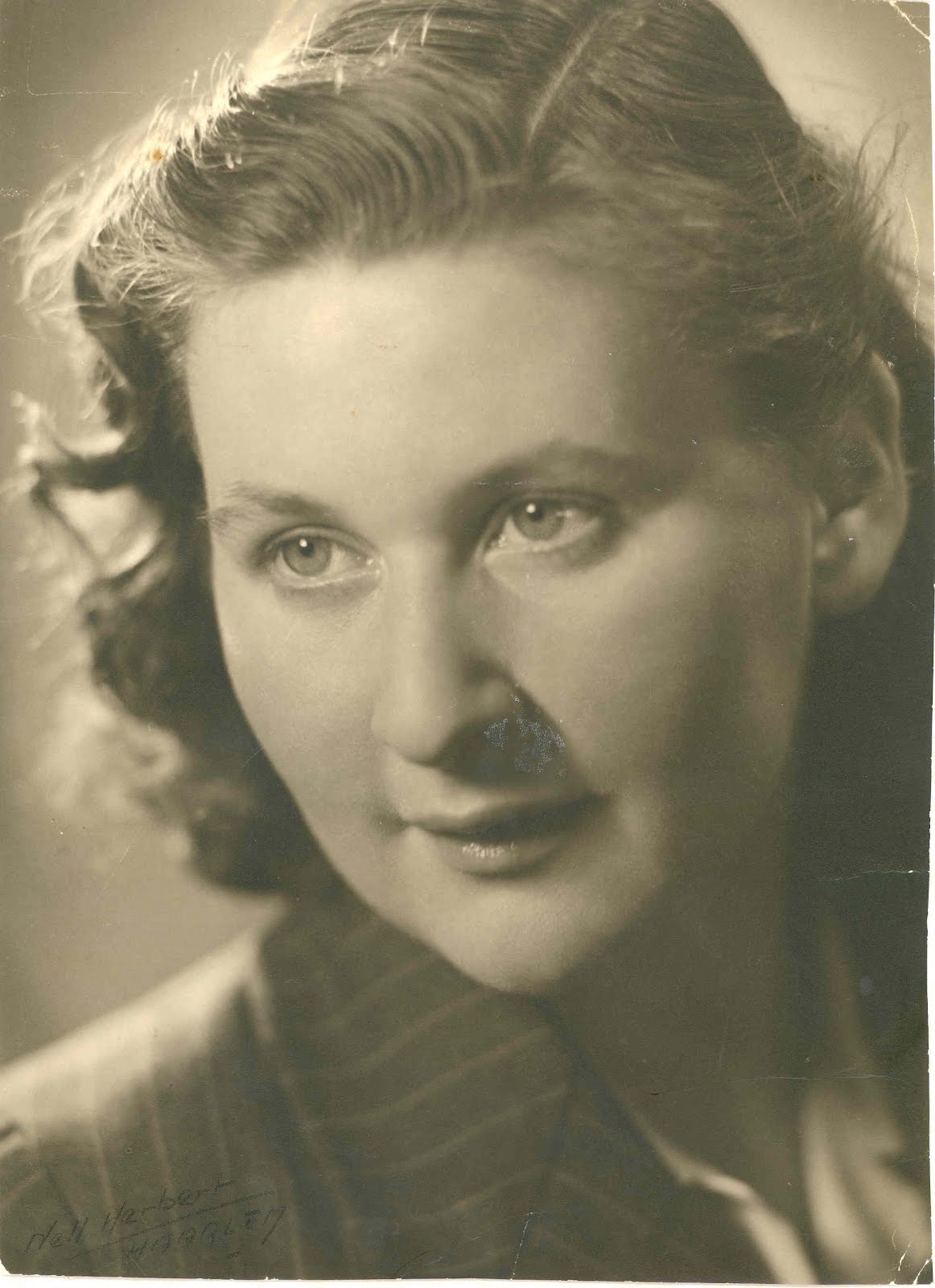
My ‘movie star mother’: no need for jewellery then.

I think back and I cannot visualise my mother wearing a necklace or a bracelet, certainly not earrings. There are no jewels on display in her photographs, no efforts at adorning her body with trinkets of beauty. Nor did she wear much makeup, other than her trademark smear of red lipstick whenever she went out – if only as far as the local shops – and the dusky pink of her compact powder. She dabbed the puff against her cheeks and on her nose, her hooked nose. Aquiline, she said, like an eagle, and a sign of aristocracy.

More recently my mother tells me her brothers used to say she was Jewish because of the shape of her nose, which I too have inherited, though perhaps not quite as pronounced as my mother’s.

It seems odd to reflect back on the meaning of such a taunt in those days, especially given what happened during the second world war.

There is some evidence that there was a Jewish grandmother in my family of the great great variety, going back several years but my mother does not talk about such things these days.

Still I enjoy the idea of hybridity. I enjoy the idea of having all manner of ancestors in my past, all varieties, multiple races.

Purity does not sit well with me. The notion of a pure breed. It feeds our tendencies to see ourselves as superior or inferior for no other reason than the colour of our skin, the shape of our noses, the nature of our hair.

I suppose I could add a touch of madness to the list of inherited tendencies. Not that I think madness is carried in our genes, maybe a predisposition towards it, but madness needs a certain environment in which to flourish. On top of which in the primitive recesses of our minds, in the dim dark corners of our dreams, I reckon we all sport a little madness, and a good thing, too. It adds to the variety and the creativity that make up our lives. Without a quirk of eccentricity, not too much, not too dominant, our lives would be all the more dull.

I was telling you about my mother’s passion for jewellery. Mine is greater. I prefer silver to gold, not just because of the prohibitive cost of gold, but more because of the blue in silver. Blue is my favourite colour. The blue in silver, its watery properties, its potential coldness, they all appeal to me in a way the warmth of gold does not.

I did not always have this passion for jewellery. It came on when I was in my early twenties, when I decided what a thrill it might be to wear earrings that hung free from my ears.

In those days I lived next door to a nurse. She offered to help me with the job of piercing each lobe with a thin sterilised sewing needle. There were not the signs in chemist shops then, signs that touted for business in the piercing of ear lobes. Most people – and there were not so many who wanted or wore pierced ears from my memory – took themselves to the doctor for the procedure, but as in so many other matters to which I take a fancy, I wanted my ears pierced then and there.

It is striking how quickly the pain of an event subsides and disappears from memory, rather like the agonies of childbirth. They say women need to forget the degree of pain quickly otherwise they might not go back for more babies after the first.

My friend the nurse cleaned my earlobes with methylated spirits and she plied me with alcohol. In those days I did not drink much by way of alcohol and my choice of the stuff was limited to the likes of crème de menthe and cherry brandy, sweet and hardly efficacious in the process of dulling pain, but I had taken what today are called shots of creme de menthe and waited to feel numb enough and drunk enough to withstand the pain.

It was over soon, but the nurse drove the needle crooked in one lobe and it forever causes me trouble whenever I try to attach an earring. In later years I had my ears pierced properly with a type of nail-gun in a chemist shop. My memory of that event is one of short and sudden, awful pain.

Why do we do it? Why do we inflict pain on our bodies purely for the sake of what some of us consider beauty? I cannot say. I only know that I would not allow my daughters to get their ears pierced until they could be certain of their capacity to endure pain. And all for the purpose of attaching baubles to their ears,in contrast to my movie star mother who waited until after her babies were born to be initiated.
Late night trumpet calls

My husband has been away these past few days and I have been sleeping like a top, sleeping so soundly the hours pass in an instant. And it’s not because I do not miss him.

How can I write this without seemingly taking the mickey out of the man I love? I have been thinking on this issue for some time now. Ever since I read Lynn Freed’s wonderful book on Reading Writing and Leaving Home.

My husband has left home, albeit briefly, and I am left lonelier, but free from his incessant snoring. Lynn Freed writes about snoring stories as the great stories of revenge, the way in which at dinner partes, women, and it is usually women, tell stories about the nature of their husband’s snoring. They can keep their fellow dinner guests in stitches as they regale them of the horrors of those late night trumpet calls, while the husband, the poor perpetrator of said snores is left humiliated and in shame.

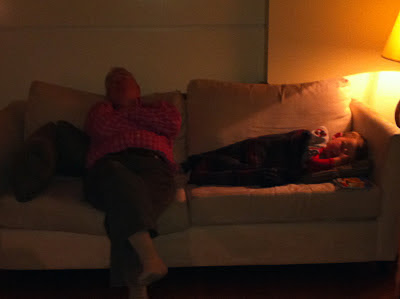
Two generations – asleep and snoring?

It’s true. I do not write about such things as a rule because I do not want to humiliate or belittle the ones I love, or do I?

My thesis topics pops back into my mind. It has been absent for several months now. I’m still waiting to hear whether or not I have passed. Life writing and the desire for revenge. The way in which a desire for revenge can inspire writing, not that I want to take revenge on my husband or do I?

I cannot talk easily about his snoring. He finds it insulting. He tries to stop. He rolls over when I nudge him, but even then within minutes his throat constricts and he is back at it again.

Is it his helplessness against snoring that causes him to want to throw it back at me? ‘You snore, too.’ The gut impulse. The talion principle, an eye for an eye. You insult me and I’ll insult you back. Or is it something else?

Please, don’t talk about sleep apnoea or other common ailments. I do not believe it to be the case here. I put it down to age and occasionally too much red wine, but even when he drinks lightly or not at all the snoring persists. I play musical beds until it subsides.

The past few days I have not needed to move about. I can stay put, hence my sleep is more sound.

I have a friend whose wife snores. She is the culprit, and the same principles apply. They came to our house one day overjoyed to have found a new treatment, a sliver of something or other than you put on the back of your tongue, a wafer like substance that dissolves in your mouth and apparently stops the snoring.

My friend is a beautiful and dignified women in her sixties. How can it be that her snoring is enough to wake the dead? She smokes, her husband says by way of explanation. She smokes. Maybe that is the cause.

Smoking’s to blame. It seems we need to find some point from which we can blame the perpetrator of snores, hence the additional shame.

Snoring is treated as a crime, and yet it is one from which we all suffer. It cannot be a crime. It is only a problem when the person who shares your bed finds it too much. Or when it suggests some malady in need of attention.

As I said earlier, I put it down to aging. I am like my mother here. She ascribes every bodily ailment that slows her down to her aging. I, too, imagine that my husband’s snoring comes of his aging and he like me is ashamed of both.

Why be ashamed of our aging?

http://en.wikipedia.org/wiki/Joan_Didion puts it well in her recent book, Blue Nights:
‘Aging and its evidence remain life’s most predictable events, yet they also remain matters we prefer to leave unmentioned, unexplored: I have watched tears flood the eyes of grown women, loved women, women of talent and accomplishment, for no reason other than that a small child in the room, more often than not an adored niece or nephew, has just described them as ‘wrinkly’, or asked how old they are.

‘When we are asked this question we are always undone by its innocence, somehow shamed by the clear bell-like tones in which it is asked. What shames us is this: the answer we give is never innocent. The answer we give is unclear, evasive, even guilty … there must be a mistake: only yesterday I was in my fifties, my forties, only yesterday I was thirty-one…’

Didion’s thoughts about her daughter’s adoption, life, and early death lead Didion into thoughts on her own aging and frailty.

It’s a thing that dogs us all, this aging business. I talked about it recently among a small group of friends and most resonated, though the youngest of our group, a woman in her early forties with a small child at home, brushed it off. It’s too far away from her.

I used to be like that, too. I used to think that I would not worry about getting old until it hit me and then I’d die. But these days it hits me daily with a ferocity I had never imagined possible.

It is like wading through mud. The fact that I used to have a school aged child and that my mother is still alive convinced me that I was still a long way away from needing to reflect on this, but my daughter has just now finished school and my mother who lives on and now plans to reach one hundred, reminds me of my age.

‘You have to recognise you are old,’ my mother says, ‘when you have a seventy year old son, a forty year old granddaughter and a six year old great grand son.’

Where did the time go?