My mother’s piano

I have been following some of the discussion on the blog No place for sheep, in part a debate over feminism, in part over freedom of speech and all because of one woman’s threat to sue another for defamation.

I am amazed at the heat that’s generated there. The language from those who comment is largely academic, or religious or occasionally a rant.

I do not feel equipped to enter into the discussion. It terrifies me. I stand in awe of Jennifer Wilson’s ability to respond to her detractors. I could not sleep at night if it were me.

The comments roll in thick and fast, as if we are on a battle field and the first line of attackers arrive only to be repelled, soon followed by the next line of attack. Of course there are many, perhaps more commenters, who are on Jennifer Wilson’s side.

It puts me in mind of the nature of conflict and how we deal with it, on line and off. I’m not so good at it myself. A fight wells up and I can feel my heart thumping, the perspiration under my arm pits shudders to the surface and my mouth goes dry.

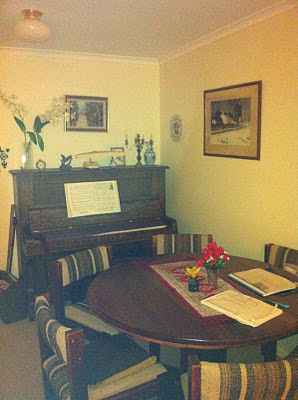
I pitch myself back in time to my mother’s piano in the hallway of the Camberwell house. It is a tall and dark hearse-like instrument with keys made of real ivory. I think of all the dead elephants that went into the making of my mother’s piano, elephants all the way from Africa.
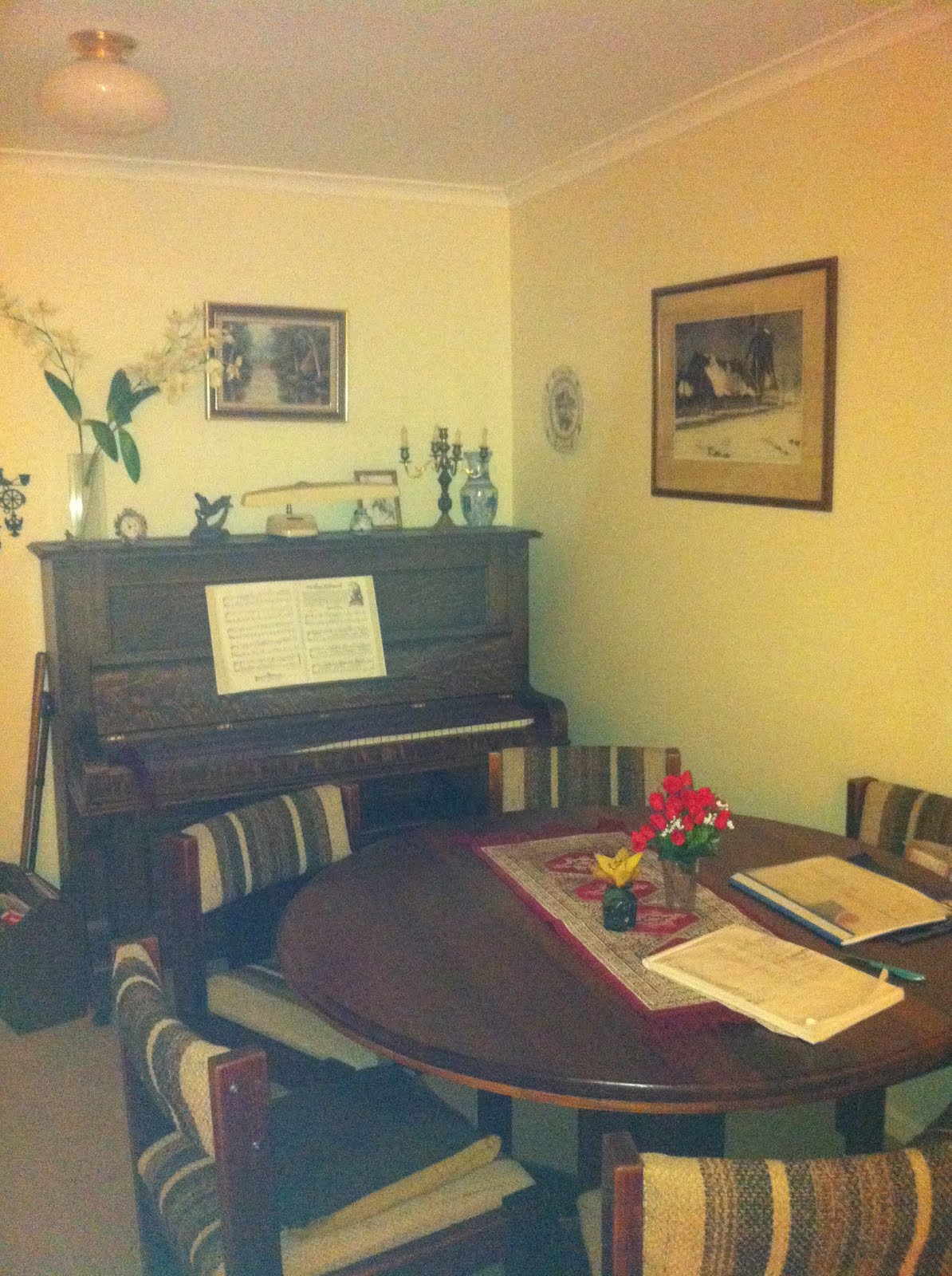
The name above the keys in gold lettering, ornate as a dancer, takes me to Europe in my imagination. A German name maybe, or Austrian. A name that speaks of dead composers, or ancient carpenters, cabinet makers, craftsmen, always men, who built the box that holds the sliced elephant tusks on my mother’s piano.

My mother plays Die Fledermaus. She sings along, Dutch words, military words, words that take her elsewhere back to her girlhood, back to her old life, back home to the Marnixplein where the life she leads now was still a dream, filled with hopefulness and colour, filled with the joy of her youth, her beauty and her prospects.

My mother’s voice rises above the roar of trucks along Canterbury Road. My mother’s voice rises above the cacophony of voices from the television. My father turns the dial higher and higher. The television volume goes up and up.

The house is alive with noise: my mother’s music, my father’s silent screams for attention, louder and louder and I cannot think for the noise of my parents, for the drums of war, the aeroplanes that fly over head, the bombs that drop.
We are silenced.

And all the time behind my eyes an ache swells. I don’t want to fight, I want to cry.

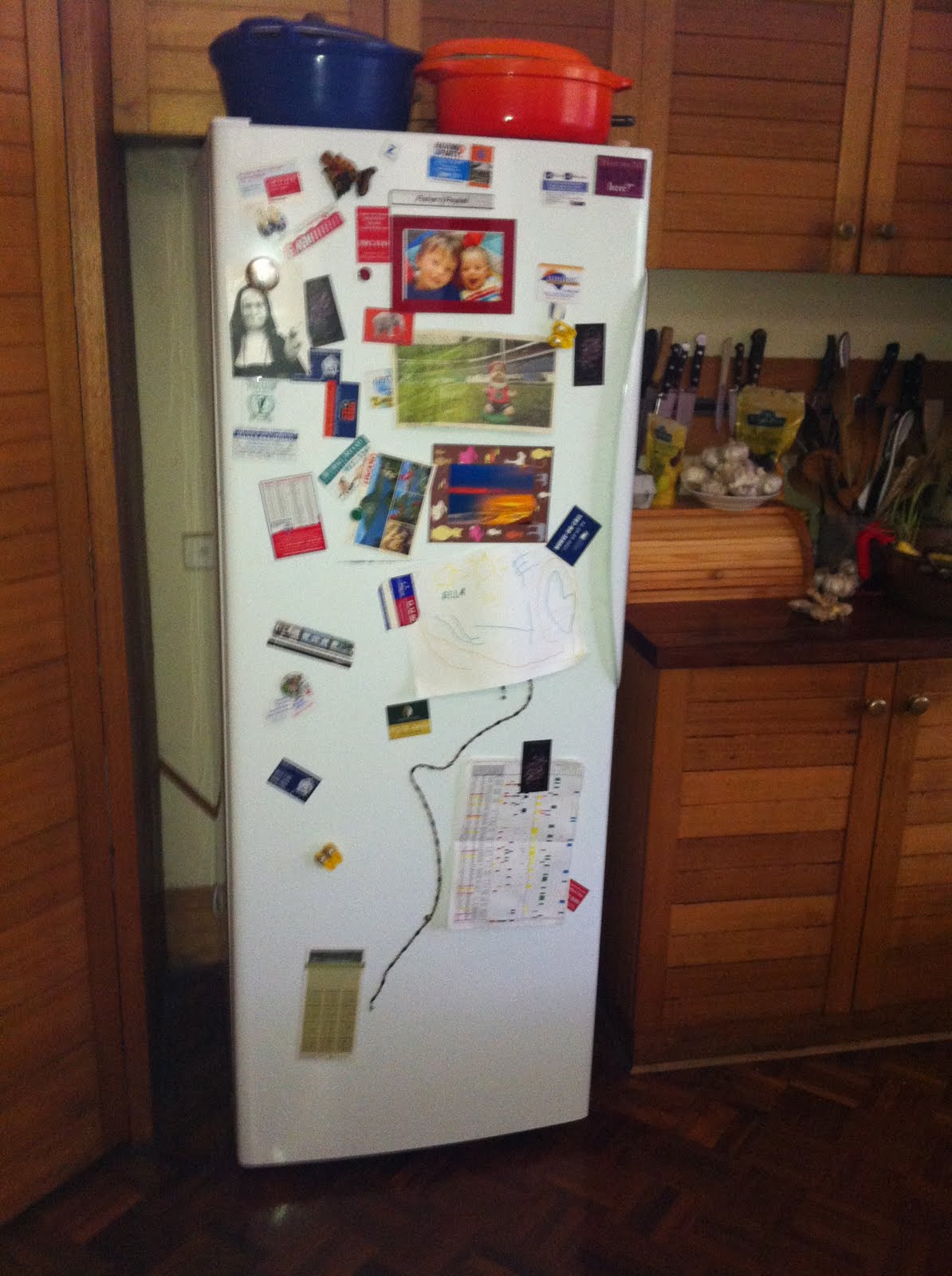
The white wall of my refrigerator

There is a leak from the refrigerator that appears from time to time and floods the bottom layer underneath the crisper until water spills out onto the floor. If I am not careful to catch it in time and the water pools for days it can cause the wooden parquetry under the fridge to split and buckle.

It has already happened several times and I fear that the boards will soon lift, distort and go out of place. Every morning I check for leaks.

It is only a new fridge, or relatively so. Is it a design fault? I have found this problem with other fridges before. Or is it the fault of my – I stress ‘my’ but I am not the only one who uses the fridge, the result of ‘our’ tendencies to overload?

A refrigerator repairman once told me that I should take care not to let anything touch the back wall of the fridge. This can cause the problem and certainly as long as I have remembered to pull things forward and make sure that not so much as a tomato touches the back wall the leaking is not so bad.

But it is easy to push things backwards. In fact that is the general tendency: load up the front and all the things already inside make their way to the back where eventually they come in contact with the white wall.

The sensitive white wall that cannot bear contact of any sort. The wall that prefers to remain untouched, like an autistic child who fears connection.

Now is as good a time as any to bring it up. Now is as good a time as any to talk about touch. When I rub the sorbolene cream into my mother’s legs, each time I visit her at her retirement village, I can sense the pleasure she gets from those soothing hands rubbing up and down her tired legs.

I focus on the dry bits, any small eruption of brittle skin. I focus on her heels which she tells me give her pain from time to time. These nights she can only sleep on her back. She does not turn as much as she once might because of her arthritis, because of her shortness of breath, and so her heels rub up against the sheets and over time they have become cracked and worn. I rub in extra layers of sorbolene cream and smooth it in to work against the dryness, to get the circulation flowing again.

It is a good time for conversation. It is a good time for connection but because I am the toucher and my mother the passive recipient I can feel safe and in control.

I am not so sure how I might feel were I on the receiving end. For you see, touch to me is dangerous. It exposes raw ends. It stirs up unfathomable feelings, longings, revulsions, fears. It is better therefore to stay like the refrigerator wall, to keep my distance.

I feel it whenever it comes time to say farewell to my children. Do I kiss them on the cheek as is the custom for so many loving parents? Do I give them a hug?

No, I hang back awkwardly, as if fearful of contact. If they are leaving for overseas or going away on a long trip I can overcome this hesitation and will hug them in farewell. I will also hug them on their return, but in the day to day comings and goings of our lives, I fear such intimacy.

Some people are too free with their hello/goodbye kisses, but not me. I think about them. I measure the moment.

And here my childhood mantra applies: ‘If he touches, you scream’. My sister’s words ring in my head and I set my body rigid. I become the fridge wall. I brace myself for contact, as if a knife is about to slice open my skin.

The days of leaning over my father to say goodnight, to receive the scraping of his rough thumb and finger on my forehead float across my memory.

My father scraped a sign of the cross on the forehead of each of his children at bedtime. The sensation stays with me. My forehead bears the mark. The long frown mark down the centre, worn away through the years like my mother’s heels, a mark of his presence and a reminder to me to avoid touch.

My father’s yellow nicotene stained fingers, the nails clipped short and clean, the smell of his brandy charged breath, the scrape of his accented words across my ears.

‘Goodnight,’ he says in Dutch. ‘Goodnight,’ we say in English.

The thought then as we all stand awake at this moment in one another’s company: we are safe but later in the darkness when each is scattered into her own bed, when my father starts to wander the hallway and check out the rooms in search of companionship, then I freeze over and turn into the white wall of my refrigerator.

Do not touch me.

If you touch me I will burst open and leak. I will spill all over the floor. I will cause your foundations to buckle and eventually I will break down.