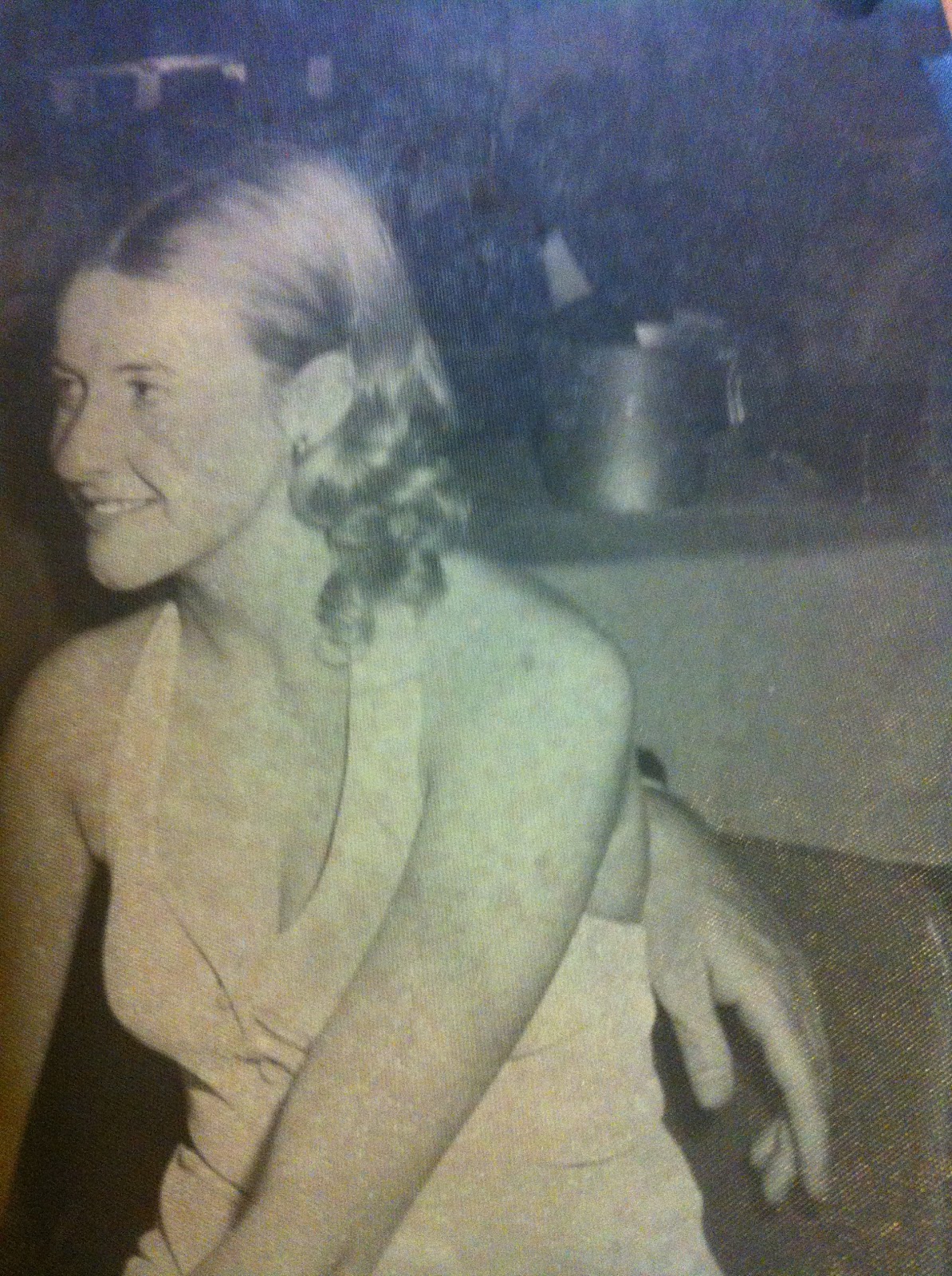
When I was thirteen one of my older brothers asked me to be
a bridesmaid at his wedding. His
wife to be had invited her neighbour’s sixteen year old daughter and I was to
be the younger bridesmaid in place of my older sister who was too old to fit
the bill, for reasons I still do not fully understand.
a bridesmaid at his wedding. His
wife to be had invited her neighbour’s sixteen year old daughter and I was to
be the younger bridesmaid in place of my older sister who was too old to fit
the bill, for reasons I still do not fully understand.

My older sister was hurt to be overlooked in this way and I
felt … triumphant is the wrong word.
I don’t remember wanting to get one over my older sister – four years
older and we were not in the same league – besides I felt hurt for her and a
little apprehensive for me.
felt … triumphant is the wrong word.
I don’t remember wanting to get one over my older sister – four years
older and we were not in the same league – besides I felt hurt for her and a
little apprehensive for me.
I come to this story this morning out of a sense of
apprehension. For weeks before the
wedding I worried that I might cop a cold sore, and that my face would become
an unsightly mess just as I was meant to look my best.
apprehension. For weeks before the
wedding I worried that I might cop a cold sore, and that my face would become
an unsightly mess just as I was meant to look my best.
On top of this I was in that in-between stage of
development. The dressmaker complained
to my sister in law to be that I was a dressmaker’s nightmare. My cup size was in between. If she took a fitting now two months
before the event she’d have to allow for the very real possibility that by the
day of the wedding I’d have grown a full cup size.
development. The dressmaker complained
to my sister in law to be that I was a dressmaker’s nightmare. My cup size was in between. If she took a fitting now two months
before the event she’d have to allow for the very real possibility that by the
day of the wedding I’d have grown a full cup size.
I stood in my petticoat as my sister in law to be and the
dressmaker considered the possibilities.
dressmaker considered the possibilities.
‘Just buy her an oversized bra.’
Do you remember that time in your life when any mention of
your body in public was mortifying?
I blushed.
your body in public was mortifying?
I blushed.
At thirteen years of age my breast development was such that
my mother did not consider a bra necessary yet. I had longed for one, not out of any bodily need but more
because I had wanted to feel more grown up. I did not want this matter discussed, however. Mine was a secret longing.
my mother did not consider a bra necessary yet. I had longed for one, not out of any bodily need but more
because I had wanted to feel more grown up. I did not want this matter discussed, however. Mine was a secret longing.
The bridesmaid’s dresses were in a yellow satin with a rough
texture in the fabric that shone.
My shoes were white. My breasts were pointed under the hard shell of my oversized bra and as I walked up the aisle first in line of the
wedding party I could see my brothers’ eyes out on stalks.
texture in the fabric that shone.
My shoes were white. My breasts were pointed under the hard shell of my oversized bra and as I walked up the aisle first in line of the
wedding party I could see my brothers’ eyes out on stalks.
I feared they might say something later at the reception, but they did not.
Apprehension is the order of the day. I am about to take a trip to the Blue
Mountains to spend a week at Varuna with the aim of immersing myself in my
writing. A small group of us will
come together under the mentorship of Robin Hemley to advance our
books, our projects, whatever we might have on the boil, and I am frightened,
excited, and fearful of what might transpire.
Mountains to spend a week at Varuna with the aim of immersing myself in my
writing. A small group of us will
come together under the mentorship of Robin Hemley to advance our
books, our projects, whatever we might have on the boil, and I am frightened,
excited, and fearful of what might transpire.
Will I seize up?
Will I write a load of crap?
Will I use my time productively?
Will I write a load of crap?
Will I use my time productively?
For those who don’t know, Varuna is a writer’s retreat in
Katoomba, nestled in the beautiful Blue Mountains in New South Wales.
Katoomba, nestled in the beautiful Blue Mountains in New South Wales.
I leave before six am on Monday and
should arrive around one, after taking a plane to Sydney and from there a train
to Katoomba.
should arrive around one, after taking a plane to Sydney and from there a train
to Katoomba.
I tell myself not to think too much about it, just to go and
while I’m there to forget about everything and everyone outside of my
writing. Can I do this? Can I so immerse myself in what seems such
an indulgence, such a longed for indulgence.
while I’m there to forget about everything and everyone outside of my
writing. Can I do this? Can I so immerse myself in what seems such
an indulgence, such a longed for indulgence.
I will not need to worry about the needs of another, except
when I ring home in the evening and check that all’s well at home. I will not need to cook
or to clean. I will not need to
otherwise work in any other way than to write – a joy greater than being a
bridesmaid even if I cop another cold sore.
when I ring home in the evening and check that all’s well at home. I will not need to cook
or to clean. I will not need to
otherwise work in any other way than to write – a joy greater than being a
bridesmaid even if I cop another cold sore.