Of weddings past and present

It worked.

For all our fears: that it would rain; that we would run out of food; that we would not keep up with the drinkers, of whom as it turned out there were only a few; or that some other unknown unimaginable disaster might befall us on the day; it worked.

And in an hour or two when every one else is up and about, the next stage of the clean up will begin, a clean up that includes a post mortem of proceedings, one of my favourite times after a significant social event, when we all get to gossip and reminisce about who said what and to whom.

Where we crow about the joys of the day and pat one another on the back that all our preparations have paid off and from time to time we might remark on something small that we could have done better, but it will only be small.

As the groom’s father left our house at the end of the day, he patted the bride’s father on the back – they’d both had a bit to drink – and said something like, ‘You’re the best person I’ve met in a long time.’

Such a compliment to my husband and even through the alcohol you could tell it was sincere. Small exchanges like this help to bring these two new families together. Now united through the marriage of our two children.

It’s one aspect of marriage that I relish, the bringing together of tribes, of families of people who would otherwise not connect. For all our differences we have similarities.


My parents’ marriage in Haarlem and my husband’s parents’ marriage in Mansfield, Australia could not be further apart, though both brides wore white veils, both carried bouquets and both their grooms wore suits. My father wore a top hat.

Both marriages happened in the shadow of world war two and in both cases you could not see the trimmings of war in the background.

I long admired the fact that my mother and father were such contrasts in height, my father six foot three, my mother five foot two  Even those measurements held some synchronicity.
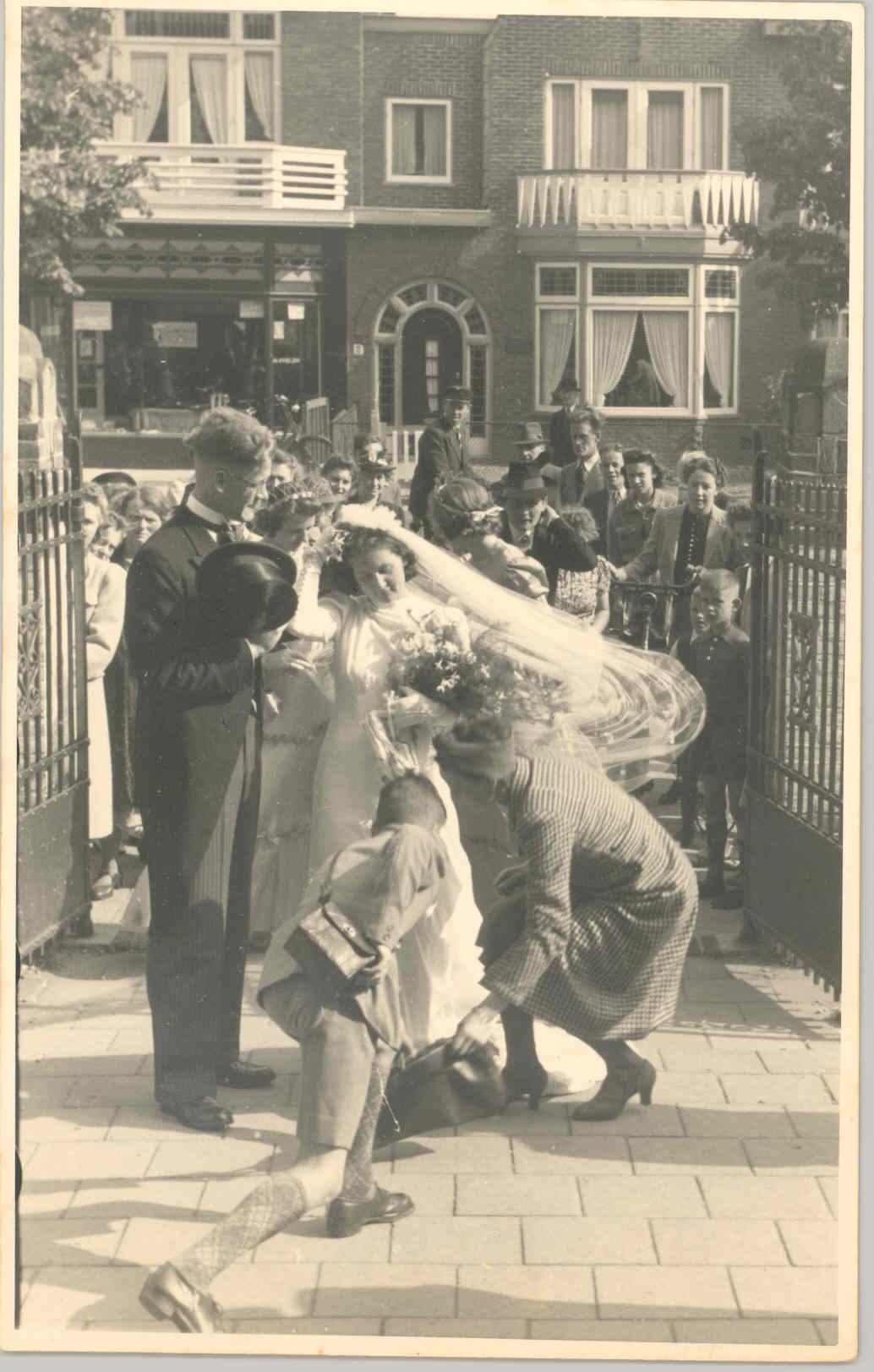
1942-6

I do not know the height of my husband’s parents though both were short.  My mother-in-law wore glasses on her wedding day, as did my father.
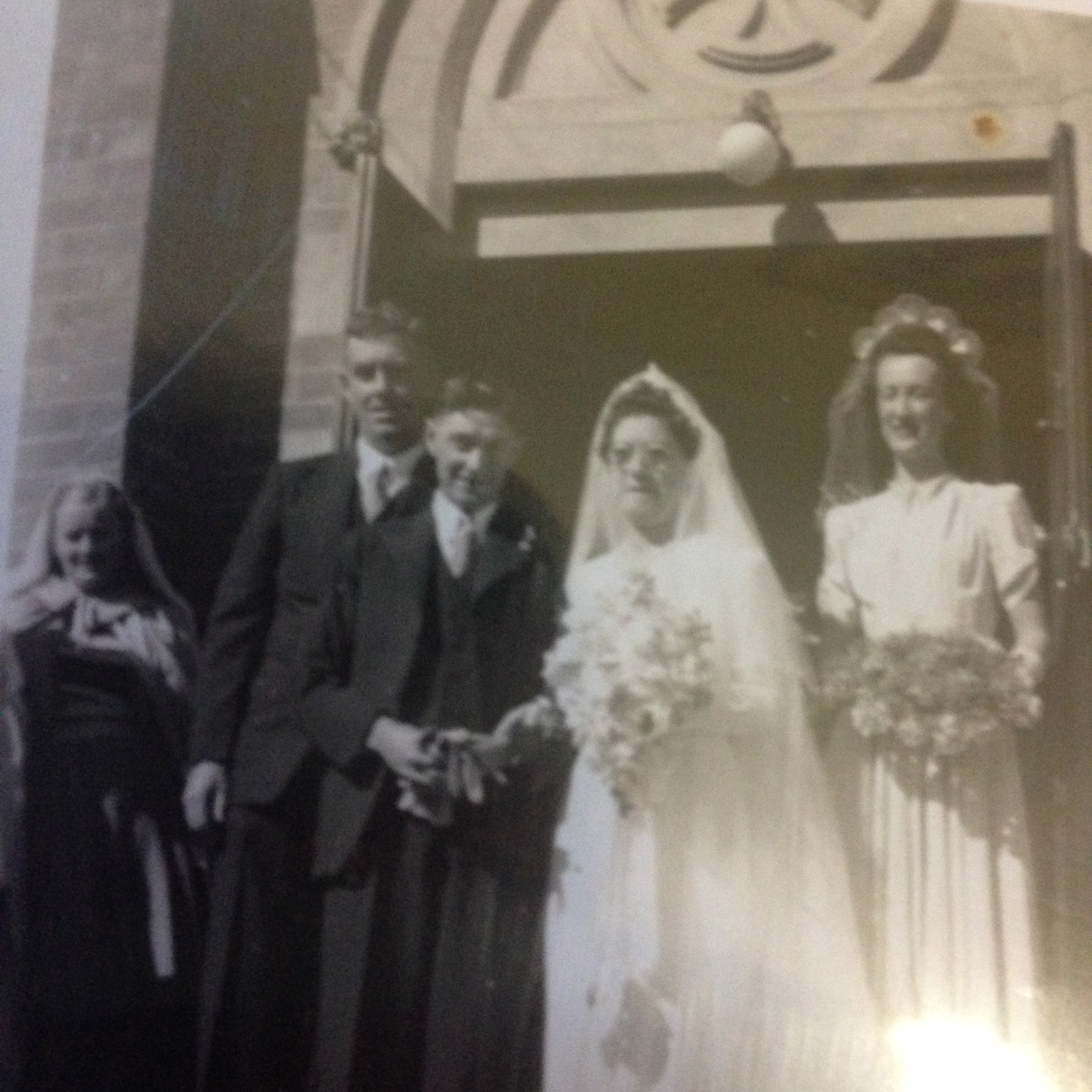
IMG_2733

And all four young marrieds had the thin look of hunger from working hard, whether on the land, as did my husband’s parents; or through war as did my parents.

When my husband and I married we failed to please either set of parents by sharing the tradition each upheld of marrying in the Catholic church. We chose instead the Religious Centre at Monash University where my husband had once studied.
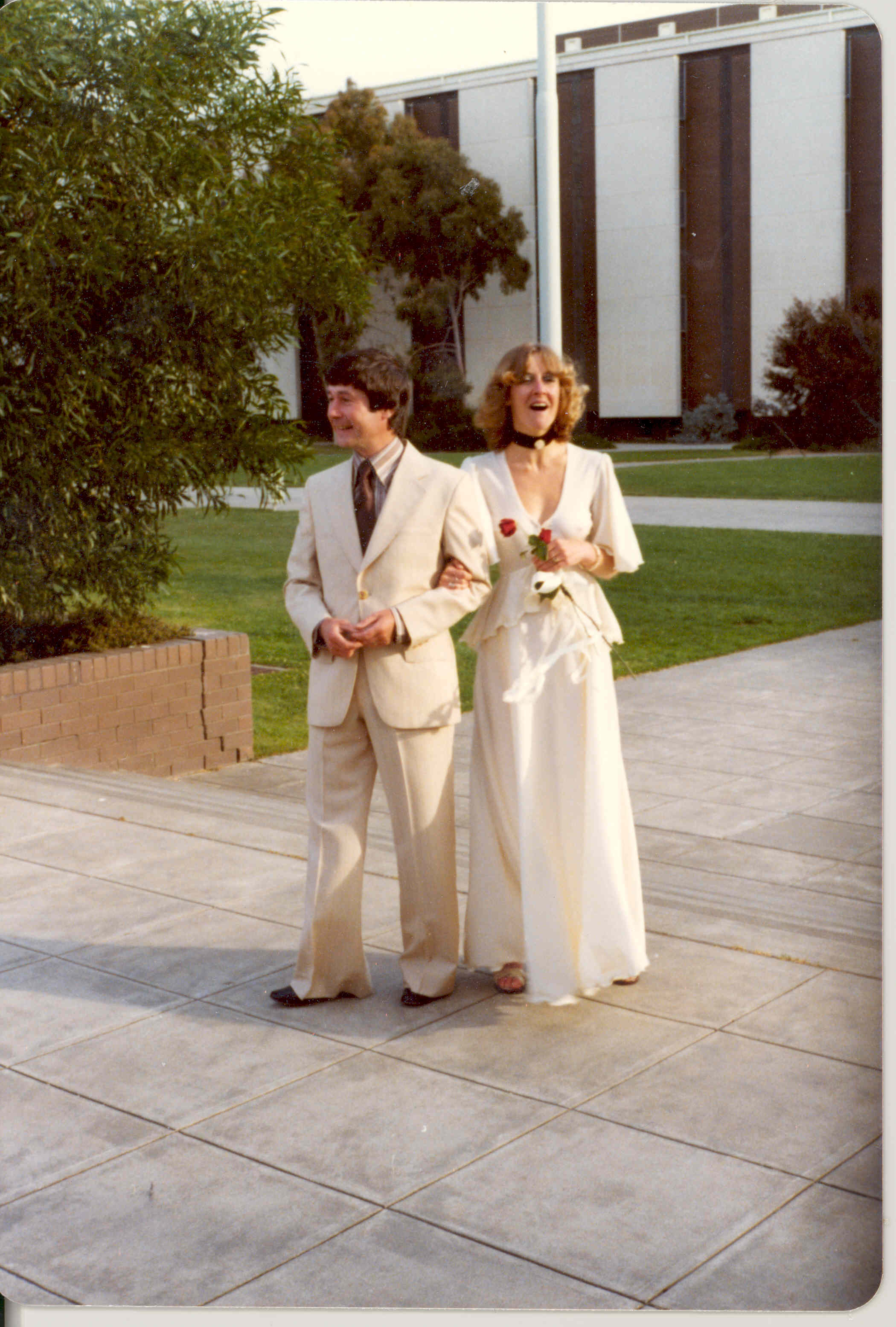
1977-3

I’m all for receptions held at home. The personal touch. My oldest daughter married in her own home, my second daughter had the reception in her home of origin. Home can be wherever we want it to be, but it’s a place where the small children, and there were several at both weddings, can run amuck in relative safety.

Not one child fell into our pond, not one child fell while running, though there were a few brawls among our two grandsons, none of great import, not that I could see and both boys managed to hold onto the rings during the service for long enough that they could in time hand them over to their grandfather who became the ring bearer on the occasion as he had made the rings.

Two daughters married, as Mrs Bennet from Pride and Prejudice fame might say: two daughters married… ‘I shall go distracted’.

Our worldly goods

We’re on a restoration drive in advance of our daughter’s wedding and need to deal with those pesky blemishes that stare at me every time I open the front door: the chipped paint around door handles; the holes in the parquetry wherever the dog, as a puppy, dug out strips of wood for his pleasure; the generalised clutter.

Our work began last weekend with the freezer, one of those old tucker box deep freezers that stands in the laundry.

I do not recommend such freezers unless you’re diligent, which I’m not. They fill fast with left overs and gifts of meat: slabs of beef from one of my brothers in law; whole turkeys from that brother in law’s sister; left over icing experiments from my daughter’s cake making days; half eaten tubs of ice cream that fell to the bottom out of sight and have since been forgotten and opened packets of frozen peas, broad beans and corn, all well past their use by dates even frozen.

I’d even kept a bottle of what I thought was vodka from my nearly thirty year old daughter’s twenty first birthday party. Vodka does not freeze and this bottle had been infused with fruit juice for cocktails and was therefore stiff as an ice block.

‘If anyone drank that now,’ my would be son in law said, ‘it’d kill them. Imagine all the bugs in the juice over all those years.’

I did not imagine bugs could get into frozen products but even frozen foods have a use by date.

I tipped the cocktail onto the garden after a few hours defrosting and wondered about all the space this bottle has taken up over time and all to no good.

Last weekend I tugged out the lot from the freezer and shoved it onto a skip in the front yard and then worried as it took an age for the men who had left the skip to take it back, by which time we’d had at least one unseasonably hot day and the whole thing had begun to stink. Even the flies were gathering.  Then it rained.

General rubbish was the requirement for waste on this skip and I worried that dead animals in the form of defrosting carcasses in green rubbish bags might attract a reprimand; even though such carcasses would readily break down.  Not the green bags though.

I think back to the days when life seemed simpler, before we worried so much about the environment we were then so blithely destroying; when I thought little about what I might have tipped onto a skip.

Now I’m mindful of waste and of recycling and my conscience never gets a rest.

They took the skip seven days later and the carcasses are gone. The deep freezer is empty except for a box of photographic paper that my husband put there in the bottom over twenty years ago, paper that came from a friend’s collection, which he had left to my husband. Paper that I understand could be precious or useful to someone serious about photography, for which reason it needs to stay in a sealed bag in the bottom of our freezer.

IMG_2674

I have not seen this paper under its wrapper and I have no idea of its actual usefulness or otherwise. This becomes one of those situations where I take my husband’s advice blindly. Besides at the moment, this box of paper – the size of a large carton of books – is not doing any harm.

I suspect this is what hoarding is about, this clutter, this collection of items that are of no immediate use but might be useful to someone someday and so you hold onto them ever in the hope that one day someone will say,

‘Just what I needed. How wonderful. Good of you to keep it for me all these years.’

They won’t say the same of the top tier of our wedding cake, though, the thought of which comes back to haunt me now on the eve of another daughter’s wedding.

We should have eaten this cake at the christening of our first born, only there was never such an event.

Shortly after our wedding, I sealed the cake in a tin from my mother in law, a tin that sported red jacketed men on horses flanked by hounds on a foxhunt somewhere in Britain. I sealed the tin with electrical tape, which has held firm but the tin itself has lost most of its colour and the hunting scene is scarcely visible.

IMG_2679

I hope to unseal this cake before I die but I cannot imagine when would be a good time.

That fear of doing damage to my marriage, like breaking open one double bricked wall in the house only to find behind some sort of cursed object that should not be touched or removed, or these days, the fear of running across and disturbing sheets of asbestos that could well kill us all over time.

I store the cake tin in the bottom of our pantry now, low down and hidden from view. Like my husband’s photographic paper, it takes up space, but this house can hold many of these storage items without straining under the weight because its house’s size.

And then comes the thought of moving.

Twenty years ago it did not trouble me.  But as time passes, the thought creeps in: one day, within the next decade, we will need to move from a house that we have occupied as a family of six people – in time adding boyfriends, partners and grandchildren.  And all their stuff.

This house is full to bursting with memorabilia  Much of it will have to go, and someone will need to sift through it, to decide what goes where.

I hope it can be me. This is not a job to leave to our children, but to ensure that this happens is to think in advance.

Another wedding at least puts us in mind of the restorations that need to happen now, small ones to make the house more presentable for the occasion, and then, two more children to leave for good – one who’s away overseas at the moment and theoretically at least counts as gone, though we have a room upstairs full of her worldly goods.

There’s only one still at home before we endure our empty nest and must consider the fate of all those lucky enough to live long lives: the dreaded downsize.