Christmas Eve and I’m well
again. At last. Only a few days of ill health but
enough to have me imagine I would never feel okay again, never my normal self. Last week I copped a virus of some
sort, presumably one I caught from my grandson after he had stayed with us. I held myself together until the final
day of my work and then collapsed.
again. At last. Only a few days of ill health but
enough to have me imagine I would never feel okay again, never my normal self. Last week I copped a virus of some
sort, presumably one I caught from my grandson after he had stayed with us. I held myself together until the final
day of my work and then collapsed.
It’s always the way. I’ve come to expect it: go on holidays
and fall ill, mostly with a minor ailment but I tend to imagine it’ll be worse,
as if I’m waiting for the final diagnosis that signifies my pending death.
and fall ill, mostly with a minor ailment but I tend to imagine it’ll be worse,
as if I’m waiting for the final diagnosis that signifies my pending death.
I’ve said this before, I’m
sure. When I was young I thought
sixty would be a terrific age at which to die. When I was young, a child at primary school, old age seemed
such a foreign country.
sure. When I was young I thought
sixty would be a terrific age at which to die. When I was young, a child at primary school, old age seemed
such a foreign country.
Last night I visited my mother in
her retirement village, the centre of that foreign country. I arrived at the end of dinner and
walked with her as she shuffled back from the dining room. There was a bottleneck of people
hunched over their walkers as we entered the corridor that leads back to her room, three old people staggering on the slight incline that leads from one
part of the corridor to the next, my mother at the rear. I looked down at my mother’s legs visible under
her skirt, at her angular though shapely ankles, on her unsteady feet. And I shuddered.
her retirement village, the centre of that foreign country. I arrived at the end of dinner and
walked with her as she shuffled back from the dining room. There was a bottleneck of people
hunched over their walkers as we entered the corridor that leads back to her room, three old people staggering on the slight incline that leads from one
part of the corridor to the next, my mother at the rear. I looked down at my mother’s legs visible under
her skirt, at her angular though shapely ankles, on her unsteady feet. And I shuddered.
It was hot yesterday, and yet it
had stayed cool in the nursing home as my mother proceeded to tell me while she
manoeuvred her walking frame behind her fellow residents. Her hips
swayed from side to side as if without the frame she might totter to the
ground.
had stayed cool in the nursing home as my mother proceeded to tell me while she
manoeuvred her walking frame behind her fellow residents. Her hips
swayed from side to side as if without the frame she might totter to the
ground.
My hips are still agile. I can walk without difficulty, though
yesterday while I was shrugging off the last of the virus, still feeling
queasy, I went with one of my daughters into the city for a dose of last minute
Christmas shopping, and thought otherwise.
yesterday while I was shrugging off the last of the virus, still feeling
queasy, I went with one of my daughters into the city for a dose of last minute
Christmas shopping, and thought otherwise.
‘Why
do you need to stand around like that?’ my daughter said to me after she came
out of the change room where she had tried on a new dress, a potential
Christmas present. ‘Like you’re a
person with special needs?’
do you need to stand around like that?’ my daughter said to me after she came
out of the change room where she had tried on a new dress, a potential
Christmas present. ‘Like you’re a
person with special needs?’
I was not aware I had been standing
around in such a way. I imagine
she expected me to look purposeful but by this time of the year
after more than one such visit to David Jones’s women’s clothes’ department –
four daughters after all, two of whom have particular tastes in clothes – I
found myself looking for a seat while I waited for said daughter to try things
on.
around in such a way. I imagine
she expected me to look purposeful but by this time of the year
after more than one such visit to David Jones’s women’s clothes’ department –
four daughters after all, two of whom have particular tastes in clothes – I
found myself looking for a seat while I waited for said daughter to try things
on.
I have noticed, in this department store at
least, there are no seats available for the likes of me on which to sit. There was a sort of cabinet in the Ted
Baker section with a British flag painted on top – Ted Baker must be an English
label, not one my daughters choose – so I sat on the edge of it. None of the sales staff seemed to
mind. But my daughter found my sitting there troublesome.
least, there are no seats available for the likes of me on which to sit. There was a sort of cabinet in the Ted
Baker section with a British flag painted on top – Ted Baker must be an English
label, not one my daughters choose – so I sat on the edge of it. None of the sales staff seemed to
mind. But my daughter found my sitting there troublesome.
I did not find my mother’s gait
troubled me yesterday, not at my age now, other than as a reminder of what is
to come. My daughter on the other
hand is in her mid twenties still in that place where old age is foreign territory and not worth considering in terms of self yet.
troubled me yesterday, not at my age now, other than as a reminder of what is
to come. My daughter on the other
hand is in her mid twenties still in that place where old age is foreign territory and not worth considering in terms of self yet.
After my mother had reached her arm
chair and flopped down into it, I sat on the flat seat of her walker
nearby. Proximity makes it easier for her to hear me.
chair and flopped down into it, I sat on the flat seat of her walker
nearby. Proximity makes it easier for her to hear me.
For the first time I noticed a
bracelet on my mother’s wrist, one I had not seen before. She told me she had bought it in Holland. It was silver with delicate incisions
cut into the surface like lace. I
knew at once I wanted it.
bracelet on my mother’s wrist, one I had not seen before. She told me she had bought it in Holland. It was silver with delicate incisions
cut into the surface like lace. I
knew at once I wanted it.
There is not much that my mother
leaves behind that I desire other than her bracelets, this one and another, a gold
bracelet, an heirloom left to her by a long dead aunt, also from Holland – a
thick gold chained bracelet that is linked to a single guilder. I would be happy to settle
for one bracelet only, if I could choose, but how could I tell this to my mother?
leaves behind that I desire other than her bracelets, this one and another, a gold
bracelet, an heirloom left to her by a long dead aunt, also from Holland – a
thick gold chained bracelet that is linked to a single guilder. I would be happy to settle
for one bracelet only, if I could choose, but how could I tell this to my mother?
So far it has been easy to tell her that I’m okay about most things she leaves behind. She can choose.
Though I once mentioned a particular preference for the crucifix on her mantlepiece, not for
religious but for sentimental reasons, as in it revives memories of the time it
sat on the mantelpiece throughout my childhood.
Though I once mentioned a particular preference for the crucifix on her mantlepiece, not for
religious but for sentimental reasons, as in it revives memories of the time it
sat on the mantelpiece throughout my childhood.
The crucifix will no doubt go to one of my mother’s more
religious children. Sentiment is not a good enough reason to inherit a crucifix.
religious children. Sentiment is not a good enough reason to inherit a crucifix.
Bracelets are different. We
daughters might fight over them after our mother has gone. Not that we would fight. Not openly at least.
We never fight, not these days, not as we fought when we were
young.
daughters might fight over them after our mother has gone. Not that we would fight. Not openly at least.
We never fight, not these days, not as we fought when we were
young.
To speak of wanting something was
forbidden from my earliest memories, only hinting would do. But it is no longer in my style to
hint.
forbidden from my earliest memories, only hinting would do. But it is no longer in my style to
hint.
Next time I see my mother I will
ask outright. It’s not as hard as
asking her other questions about the past whose answers she holds so close to
her chest I fear she will never part with them.
ask outright. It’s not as hard as
asking her other questions about the past whose answers she holds so close to
her chest I fear she will never part with them.
A bracelet is easy to give away
even if to speak of it again is to signify death. And then I imagine myself wearing my mother’s bracelet. I imagine my skin brush against the bracelet that my mother’s skin now brushes against and feel a mixture of pleasure and of revulsion. Such these days is my attitude towards death.
even if to speak of it again is to signify death. And then I imagine myself wearing my mother’s bracelet. I imagine my skin brush against the bracelet that my mother’s skin now brushes against and feel a mixture of pleasure and of revulsion. Such these days is my attitude towards death.
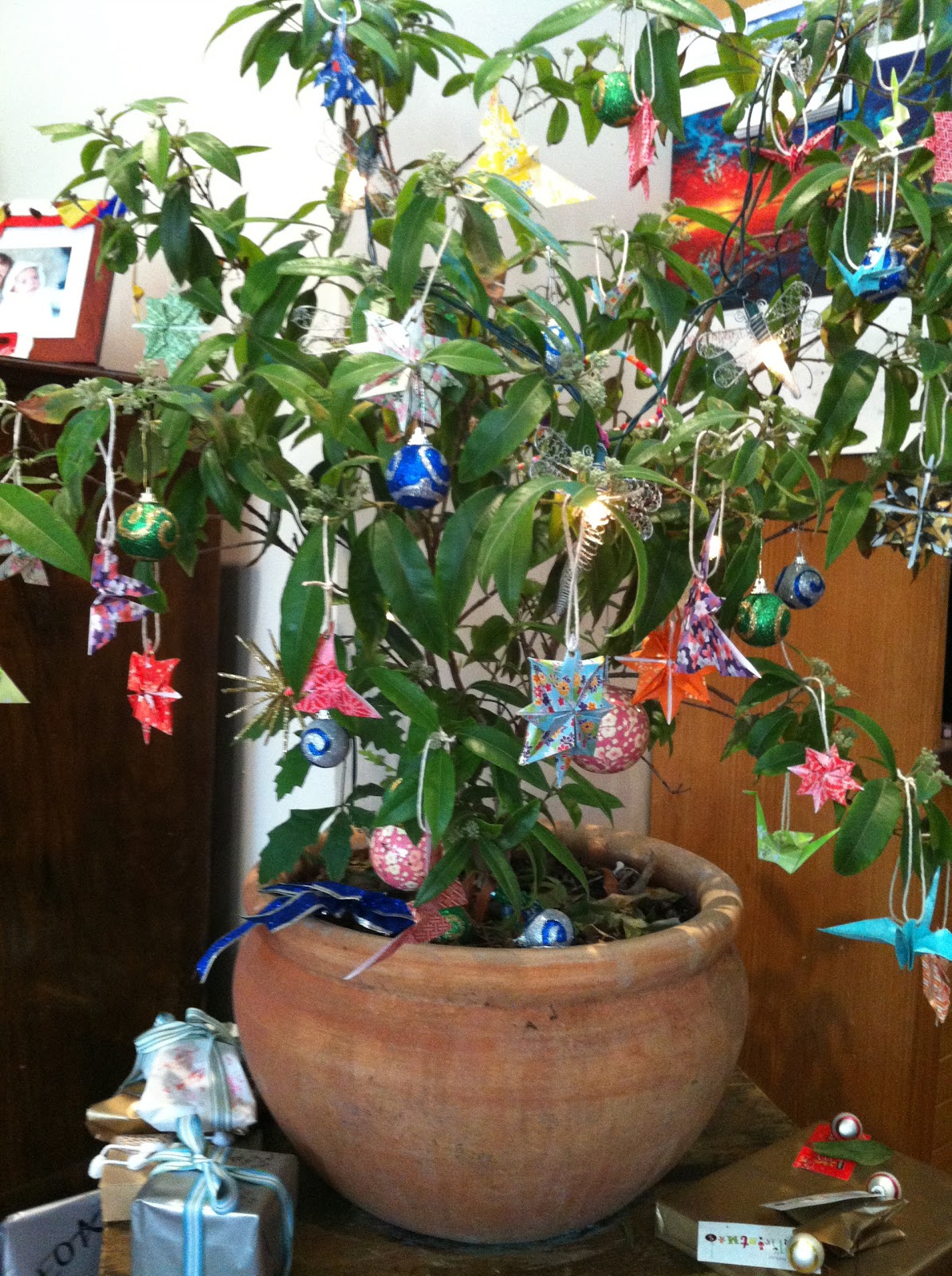
And here for good cheer is the
Lemon Myrtle my youngest daughter and I dragged in from our garden for this
year’s Christmas tree. My daughter decorated
it with her nephew. Together they
basked in that lovely place where old age and death are almost unthinkable.
Lemon Myrtle my youngest daughter and I dragged in from our garden for this
year’s Christmas tree. My daughter decorated
it with her nephew. Together they
basked in that lovely place where old age and death are almost unthinkable.