

The new packet of biros on my desk includes three bullet point observations on the back, including:
• Writes for over a kilometre
The whole idea seems odd to me. Who would want to write for a kilometre? Then again the purpose of a biro is to produce ink when pressed down hard against the page, whereas the purpose of writing is to produce images and ideas that communicate. To tell stories.
Whenever I sit down to write the thoughts that pop into my mind first are based on my most recent experience, as if my mind is dominated by the here and now.
For instance, this morning my thoughts steer back to late last night when I stayed up in order to collect my daughter from a party. We had agreed I would collect her at one am. I designed my evening around this event.
I set my alarm for half past twelve. I tried to sleep from eleven but it was not easy. I cannot sleep on demand any more than I can write on demand. Even so I drifted into sleep and woke at midnight before the alarm woke me. I made myself a cup of tea in a bid to shake off my drowsiness.
My daughter rang half an hour later just as I was about to leave. She had decided I need not collect her after all. She would stay at her older sister’s house nearby instead. If I could please collect her in the morning.
I protested. She protested. She knows by now how much I hate these sudden changes in plans. I know by now how much she is prone to making them.
It is in the nature of youth, I observe: The best laid plans are cast aside at the last minute and new plans made with gay abandon. People like me, people who prefer a level of certainty in the day to day running of their lives are left reeling.
I sat in my chair gasping after the first phone call, furious with this latest change of plan, after all, had not I organised my night around it? And now I needed to rearrange my thinking and try to sleep on demand all the while worrying about my daughter and what it was that should cause this latest change of plan.
In ten minutes my daughter had changed back to the original plan and I collected her after all.
Last night as I sat with my irritation, I told myself not to write about this. It is too close to the present and too close to those near and dear to me.
As I waited for the alarm I re-read an article about the way in which the Internet never forgets. I’ve written about this before. The way that everything that is marked down in cyberspace will be forever recorded for posterity. It’s one of the reasons why writers write, Margaret Atwood argues: to stave off death by providing a record of events that can go on forever.
But this article on the way the Internet never forgets – Jefrey Rosen’s The web Means the end of forgetting – paints a much more sinister picture, one that suggests other people will hold against you forever what you have written or shown about yourself in pictorial form.
When you are older and looking for that plum job, the powers that be, the folks who decide on whether or not you get the job, will be able to trawl through the Internet archives and drag up all sorts of stuff taken out of context that will invariably reflect badly on the person you once were.
They will conclude from this archival footage that the information gathered informs them of the person you are today and they will not therefore give you the job. Or let you into the country, as in the case of the sixty-six-year old psychotherapist from Canada who could not get into America because there was Internet evidence that thirty years earlier he had experimented with LSD and had written papers for his students to that effect.
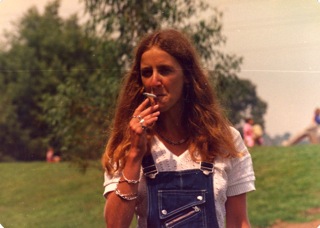
An image of me in my ill-begotten youth when I’m half ashamed to say I used to smoke cigarettes.
Never fear, there’s this outfit called ‘Reputation Defender’ who will clean up your image on the Internet if need be and for a fee, recast you in a better light.
All this talk about the dreadful things that can happen to a person via the Internet when another person decides to use the things the first person has written about to bring them to account years later. It gags free speech.
And is it true or are we bloggers living in a fool’s world in which it might seem not to matter too much while we record our most intimate thoughts only to then have them held against us in years to come when the thought police get out with their stainless steel knives insisting we wash our mouths out with soap for the things we have said?
Please pardon all the mixed metaphors here. I’m on a roll and fearful of stopping in case I dare never write a word again.
I must keep my slate clean. Leave no tell take signs exist of a life not necessarily as well lived as it might have been.
My biro is nearing the end of its mile.


