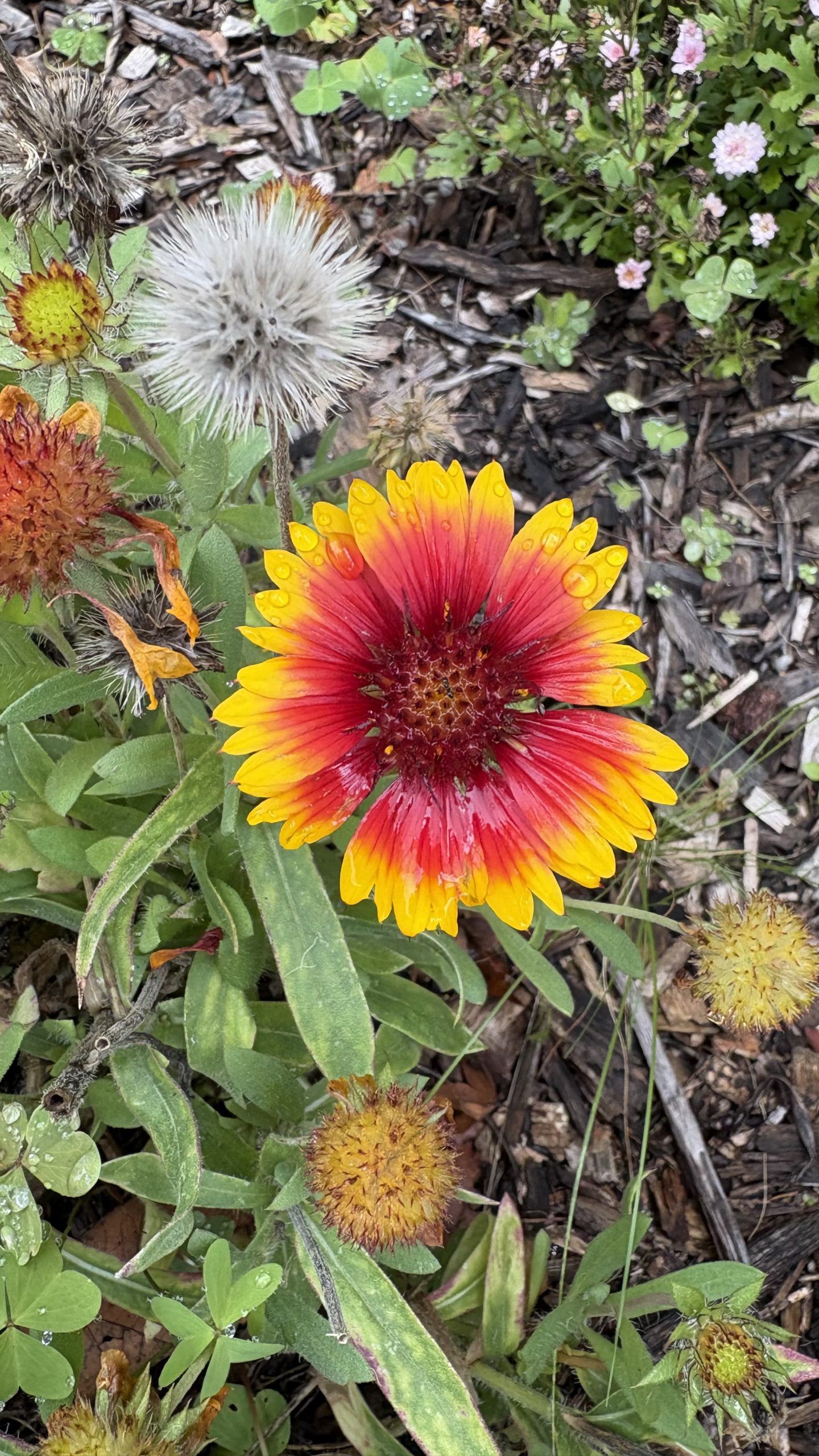
‘Who knows the dreams that lie buried here.’ Epitaph in a graveyard, William Michaelian
When I was a child, before I turned fourteen and decided on the life of social work to help others from families like mine, my dreams featured one of two alternatives. I could be like my mother. Marry a Dutch man with blond hair and blue eyes and have at least nine children. Or alternatively, I could enter the convent to join my favourite nun and dedicate my life to prayer and Jesus. The only appeal of this life was proximity to Sister Sheila whose presence in my early adolescence and well into my final years of school thrilled me in ways that many people describe as being in love.
But love is fickle when you’re young and as soon as I moved out of the convent and entered the university with its diverse peoples, most young like me, and tasted the presence of folks on a broader horizon, my love faded like a wilting flower.
My elder sister visited the convent during the months my younger sister and I boarded there when I was fifteen and one day responded to my gushing praise of Sister Shelia by warming me away from her. ‘She’s a lesbian,’ my sister said as if she was dangerous, like a contagious disease I might catch. I scoffed.
Turns out Sheila was a lesbian, or so I’ve been told, but who cares now. At least she escaped the convent before it was too late for her and before I ever allowed myself to join her so all is well, there.
She might well have managed to fulfill some of her dreams, but I shall never know.
When I shared the same school grounds we wrote letters to one another. Mine must have been syrupy sweet, though I doubt I ever declared my love, while I often questioned hers.
One day she wrote a letter including the words of some Catholic dignitary on the nature of love, the pure celibate type which she claimed to possess in contrast to the love between a man and woman in marriage.
Relationships were restricted in those days and anything that veered away from the hegemony of the heterosexual bond was banned, especially in the church. Here she was a nun surrounded by hosts of other women and none of them were allowed to get to close to one another for fear of the passions that might get aroused and yet they were also required to travel everywhere in twos. She sometimes paired up with some ancient crone whose temperament might have appalled her. But perhaps this was the strategy, keep those who with similar inclinations apart so as not to infuse too much ardour among these women who had married one man only. They gold ring on their wedding finger to prove it.
The Faithful Companions of Jesus. They covered their heads in black veils and walked the streets like their foundress from the mid 1800s Marie Madelein De Bonnault D’Houet, a woman who had once been married in France. She even had a child. But after her husband died and she was left widowed and appalled by conditions for the poor in her country she decided to set up a group of women to carry on God’s work in education their children.
It was a noble enterprise and although my occasional dreams of entering the convent including prayer to God and getting closer to my favourite nun I did not see myself as a teacher.
If I could live my life again, I imagine two other appealing careers. One to become a journalist, though when I took part in a Professional Writing and Editing course at the CAE many years ago and Barry Watts took a unit on journalism, I disliked the rule bound nature of the enterprise. The way we had to gather so-called facts and express them in order of significance.
It seemed far too ordered for my creative impulses which was to dive in anywhere and go who knows where.
Teaching might come next on my list of skills to learn. Teachers have ways of commanding a class, of ordering the curriculum, of presenting work and ideas that hold the attention of their students.
On those rare occasions, in later years when I have been tasked with teaching creative writing and autobiography at the university, my skills felt lacking, to me at least. I do not have the patience needed to teach.
So, I settle for the life I chose as a fourteen-year-old. The life of a helper without the religious trimmings of the convent. A secular life that follows in the footsteps of Freud and his cohort, steeped in notions of the unconscious and the human mind’s ability to survive in face of trauma and all the ordinary small trials that await us all before we too lie buried in a grave. Or reduced to ashes.
My fingers are chilled. In the absence of fingerless gloves, they are only part of my body uncovered beyond my face and head on these cold mornings where to type is to feel the cold rise through the keyboard.
Fingerless gloves, and I remember her hands. Sister Domonic of the short stature and regal poise. Nuns were like aristocracy. When you read the lives of the founders, many of them like our founder, Marie-Madeleine d’Houët, were noblewomen whose lives were turned on their heads for whatever reason. Women who decided the best way to finish their lives was to lead others in prayer and penance and help the sick and needy. To educate the uneducated, the children who could not otherwise get an education.
The Faithful Companions of Jesus, so named after the women who stood at the foot of the cross of Jesus during and after his crucifixion before his body was laid in the tomb. Mary, his mother, and Mary Magdala, those two symbols of the chaste and adulterous. The two symbols which have taken over the Christian world and marked women’s fate for ever. Beginning with Eve in her paradise garden and that fateful apple of temptation. After all it was her fault.
I remember these lessons the nuns taught.
‘Now girls, remember to keep a boy’s ardour in check. He cannot stop himself, but you can put a lid on anything God would not like.’
I never understood what the nuns feared might stir up in the hearts of these men, what lustful desires looked like, even as I had an inkling from my own father. His love of the salacious. His interest in women’s breasts, those featuring on the front pages of The Truth newspaper.
But the nuns were not talking about our fathers or even our brothers. They were talking about the young men who went to the schools nearby. The boys who might join our school at the nuns’ invitation. The boys from De La Salle in Malvern or from St Patricks when it existed, or from Xavier, and the Christian Boys College in St Kilda. All the local Catholic boys’ schools, including toffy St Kevin’s where we Vaucluse girls sometimes went on sports days to borrow their oval.
‘Be careful not to inflame them,’ the nuns said, as if these boys were like piles of kindling ready for the match. We needed only to strike one red head against the rough side of the small box from Bryant and May, and whoosh all would be in flames.
I have a prompt written in my scrawl on a post-it note which I stuck to the back wall of my computer along with several others. I stick these prompts onto the back of my computer for the mornings and weekends when I write. To give me a start to the process. But this prompt fails to jog my memory of what I wrote down in the first place.
But it’s an intriguing prompt.
Simply, ‘Start at the door’.
I have a door in mind. The back entrance to Vaucluse, which boarders entered after times away from the convent. A wooden door neatly recessed into an otherwise long series of brick walls, with a small entrance way shielded by a gate. Inside a green door. Green one of the primary colours of my convent school, and I don’t know why only I’d hazard a guess it might have something to do with St Joseph the father of Jesus, the real-life adoptive father of Jesus and a carpenter.
He always struck me as an odd fellow. One who was never caught up in the lust the nuns described in the boys who came to our school dances. Because he was the husband of Mary who conceived Jesus in an immaculate way, when a thunderbolt descended from Heaven.
Something like in horror films. An alien overtaking a woman. You can watch them at the movies. Like Rosemary’s Baby, only this baby was Jesus and therefore like Mary was immaculate. Without sin, until they crucified him.
When I write the story like this and remember the way it persisted in my small child mind no wonder it was confusing. The stuff grown-ups did together which we were not supposed to know about too soon, but there it was all around us. In the naked breasts of the women in The Truth and in the words of the bible if you were clued up enough to go looking.
Even in the words of the prayers. Blessed is the fruit of thy womb. I almost blushed at that one. The word womb was as obscene as the word pregnant. A word we could not say. Only that a woman was expecting. In the family way. A euphemism for the consequences of all the ardour the nuns taught us belonged only in marriage.
When I brought my husband his second cup of tea for the morning, after I had made my own second cup and warmed my ice-cold fingers under the warm water tap to get the circulation going again, I told him I need some fingerless gloves.
‘Don’t you mean mittens,’ he asked.
“No,’ I said. ‘Fingerless gloves, the ones without fingertips so you can use your fingers freely.’ He looked bemused. ‘Mittens,’ I went on. ‘The type that have no individual finger covering only a mass covering.’ I wiggled my fingers in front of my face. Mittens are usually for children who do not need to use their fingers. The rest of us wear gloves.’
I shall make it my business to get myself some fingerless gloves before these cold days are over.
I shall look like Sister Dominic only I am now so much older than she was then. I was a girl in her mid-teens, and Sister Dominic was in her thirties. Still a young woman and still young when she finally left the convent a few years later.
I know so little about her. She and my analyst Mrs Milanova morph into one in my dreams. And I have long thought of both as replacements for my mother. In my psyche.
Both were elusive. They were hard to find, and I searched for them everywhere. The number of dreams I have when I’m back at Vaucluse as when I was sixteen, walking along the ambulacrum with its red brick colonnades in search of Sister Dominic or Sister Shella as she became.
After Vatican Two the nuns were permitted to show their hair and shorten their habits if they chose. Some chose not to. At least not at first. Nuns could also go back to using their first names. No longer having to bear the names of saints, often male saints. A practice that baffled me as a child.
All these women sporting the names of men. Sister Mary Paul, Mother Mary John, before they dropped the Mother appellation for Sister. Sister Stanislas, Sister Anthony.
By the time I reached the end of my school journey all nuns had stopped calling themselves Mother, all except the reverend mother. Over the years they even dropped the sister and all other tell-tale signs of nuns though some still wear crosses on the pointy ends of their collars. Hell bent on revealing something of their religious affiliation.
Not always a safe thing to do.
I left you a long time ago at the door to the convent on Rowena Parade, the one we boarders used after weekends away. Once inside the boxy office where we were greeted by the nun on duty usually one of the workers from the kitchen. These were the nuns who lacked the education of the more esteemed nuns and sent their lives in actual service to God and the other nuns and the boarders.
They cooked and cleaned. They scrubbed floors. The hid behind the scenes but we caught glimpses of them when we walked through the back corridors of the convent where they day scholars never went. On our way to the dormitories, a stone’s throw from the nun’s cubicles. Only we never went their either. Forbidden territory.
So much forbidden territory in a convent. We walked over tessellated tiles, red and ochre with cream borders. Onto parquetry floors and the sign. ‘No stilettos allowed’.
I could only imagine some mothers who came to the convent in their stilettos who walked along those cold floors in stockinged feet, suddenly dismantled and reduced in stature after an edict from the nuns who despised all things worldly, in anyone who visited the convent, especially its students and inhabitants.
My index finger is losing circulation again and the need for fingerless gloves increases. We are only just onside the convent barely through the corridor that runs past the reverend mother’s room which you would not want to visit unless you were called to receive your blue medal as a daughter of Mary. Otherwise, it was tantamount to being called to the principal’s office in a secular school. And only happens to those who are bad. To those who have sinned. To those guilty of wrongdoing.
And I cannot say I went to the reverend mother’s office for such behaviours because on the surface I practised being a good girl. I stayed away from trouble and practised all the things the nuns taught.
Chastity, poverty and obedience even before I ever made their vows. And although I was once tempted to join them, all in a bid to stay close to Sister Dominic/Sheila, in the end, the life at university with all the shattering of illusions, even with my few visits to the Newman society, the place the University of Melbourne where Catholics pooled together, I could not stick by her side.
There was a whole world out there promising so much more. Even as I contemplate wearing those fingerless gloves and evoking her spirit in my memory, I am no longer lured to such a life of austerity.
For her to banish the chilblains. For me to banish the cold.