An experiment in second person

The air was thick with the smell of paint but you didn’t complain. If anything you enjoyed the newness that came with white walls and the chemical pong of freshly laid lino.

The floor boards gleamed with varnish enough to act as mirrors and you thought for the first time ever you might be able to invite one of your school friends into this house, if only during the day when your father was not drinking.

The filth of the old house fell away and you began to take pride in wiping down the benches after breakfast each morning.

At night you looked out of the window above your bed and tried to imagine you were living in some foreign country closer to the equator than here in Cheltenham on a busy main road in the new AV Jennings estate where every house matched its partner in all but number.

By then you were the oldest child living at home, so you had first choice. You took the bed closest to the window and your younger sister was happy to look across to the sky from her bed on the other side. The two of you took turns to be the last to say goodnight in an interminable game of who’d be the last to speak, and although your father had told you to leave the venetian blinds alone, only to open them in the morning and to close them at night using the cord that adjusted the light, ever since your arrival you’ve pulled the blind up to the top of the window frame so that you and your sister could both get a complete view of the night sky from this large window that was nothing like the windows from the houses in which you’d lived in the past.

These old houses blocked out the light with tiny windows that were designed to minimise heat loss, but here in Cheltenham when people no longer feared the cold and heat so much as they did when your parents first arrived from Europe, you could have windows that took up whole half walls and more.

Scan0006

For weeks the ritual of going to bed, of raising the blinds, of staring at the night sky until your eyes grew heavy and you fell asleep was your favourite activity until one morning at breakfast when your father decided to check on your room. Not so much to see whether you had made your beds – your father never seemed troubled by such things – but to see whether you’d done as you were told.

Most mornings you remembered to put the blind to rights before you left your bedroom for breakfast but on this morning, an autumn morning when the weather was beginning to turn, your father asked,

‘Which one of you pulled up the blind last night?’ His face was frozen over as if just a few inches under the surface of his skin an army of soldiers were gearing up for attack.

Your tongue stuck to the roof of your mouth.

‘Why shouldn’t we fix our blind any way we want?’ your sister said to your father in a voice that stunned you for its audacity.

Your father grabbed your sister by the head and threw her against wall with all the force of his army and she let out a cry.

He let her loose and she slumped into a chair while he turned and walked back to the lounge room to his favourite seat by the fire and you looked at your sister and worried about brain damage from the force of the blow.

Your sister began to cry then, quiet tears and you felt like George Pell on the third day of the hearing into child sexual abide.

You could not take responsibility for your crime.
Of weddings past and present

It worked.

For all our fears: that it would rain; that we would run out of food; that we would not keep up with the drinkers, of whom as it turned out there were only a few; or that some other unknown unimaginable disaster might befall us on the day; it worked.

And in an hour or two when every one else is up and about, the next stage of the clean up will begin, a clean up that includes a post mortem of proceedings, one of my favourite times after a significant social event, when we all get to gossip and reminisce about who said what and to whom.

Where we crow about the joys of the day and pat one another on the back that all our preparations have paid off and from time to time we might remark on something small that we could have done better, but it will only be small.

As the groom’s father left our house at the end of the day, he patted the bride’s father on the back – they’d both had a bit to drink – and said something like, ‘You’re the best person I’ve met in a long time.’

Such a compliment to my husband and even through the alcohol you could tell it was sincere. Small exchanges like this help to bring these two new families together. Now united through the marriage of our two children.

It’s one aspect of marriage that I relish, the bringing together of tribes, of families of people who would otherwise not connect. For all our differences we have similarities.


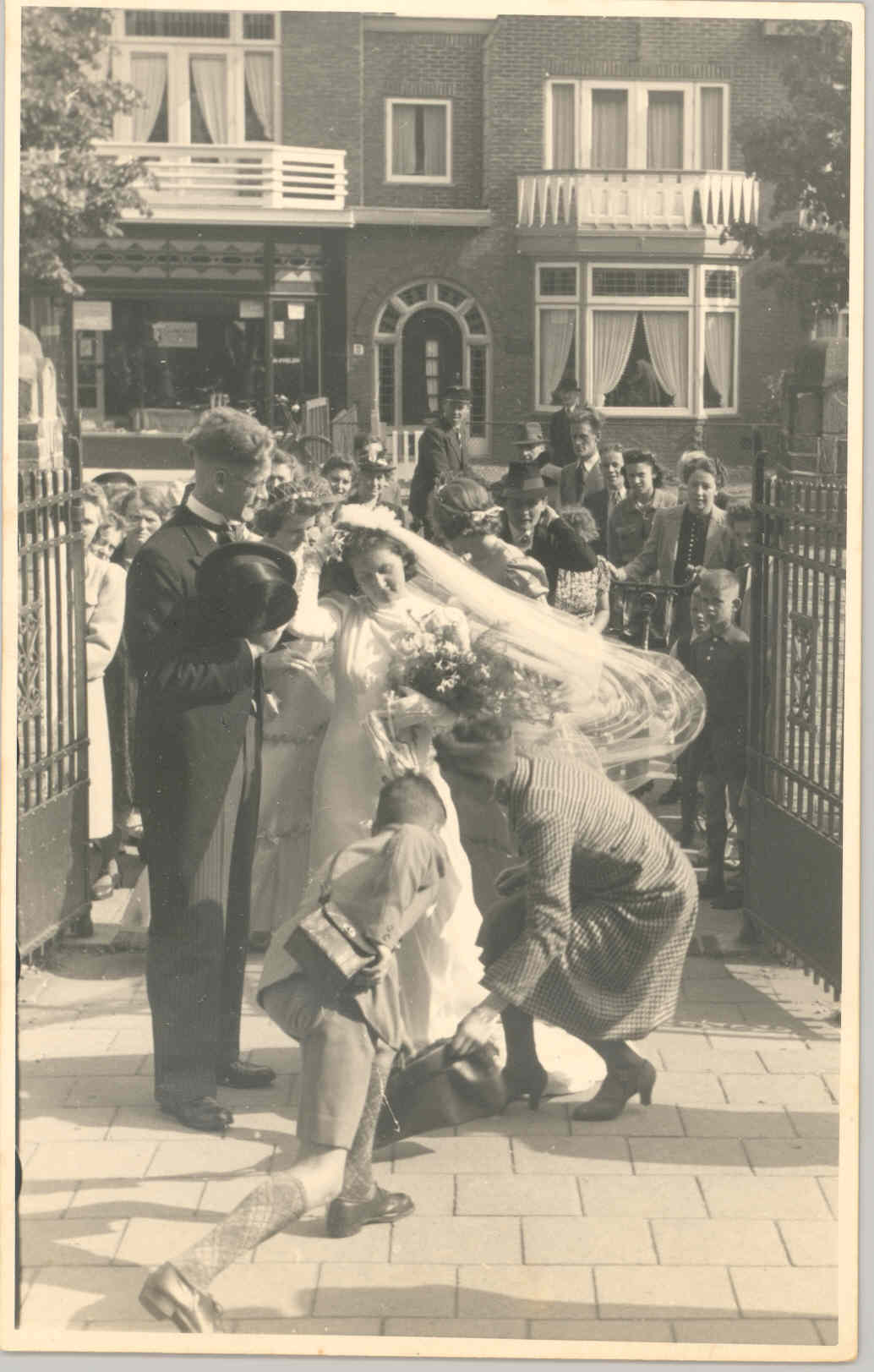
My parents’ marriage in Haarlem and my husband’s parents’ marriage in Mansfield, Australia could not be further apart, though both brides wore white veils, both carried bouquets and both their grooms wore suits. My father wore a top hat.

Both marriages happened in the shadow of world war two and in both cases you could not see the trimmings of war in the background.

I long admired the fact that my mother and father were such contrasts in height, my father six foot three, my mother five foot two  Even those measurements held some synchronicity.

1942-6

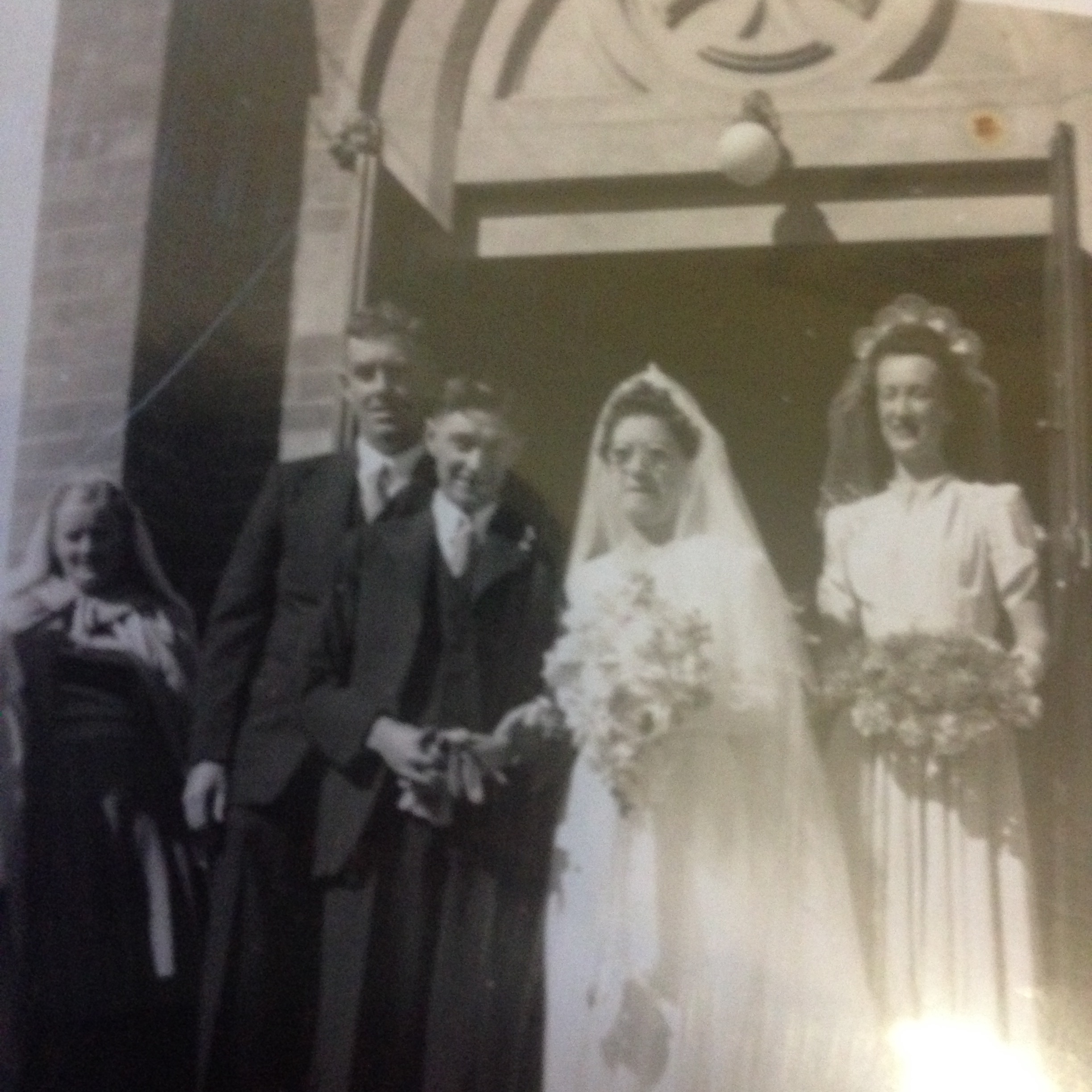
I do not know the height of my husband’s parents though both were short.  My mother-in-law wore glasses on her wedding day, as did my father.

IMG_2733

And all four young marrieds had the thin look of hunger from working hard, whether on the land, as did my husband’s parents; or through war as did my parents.

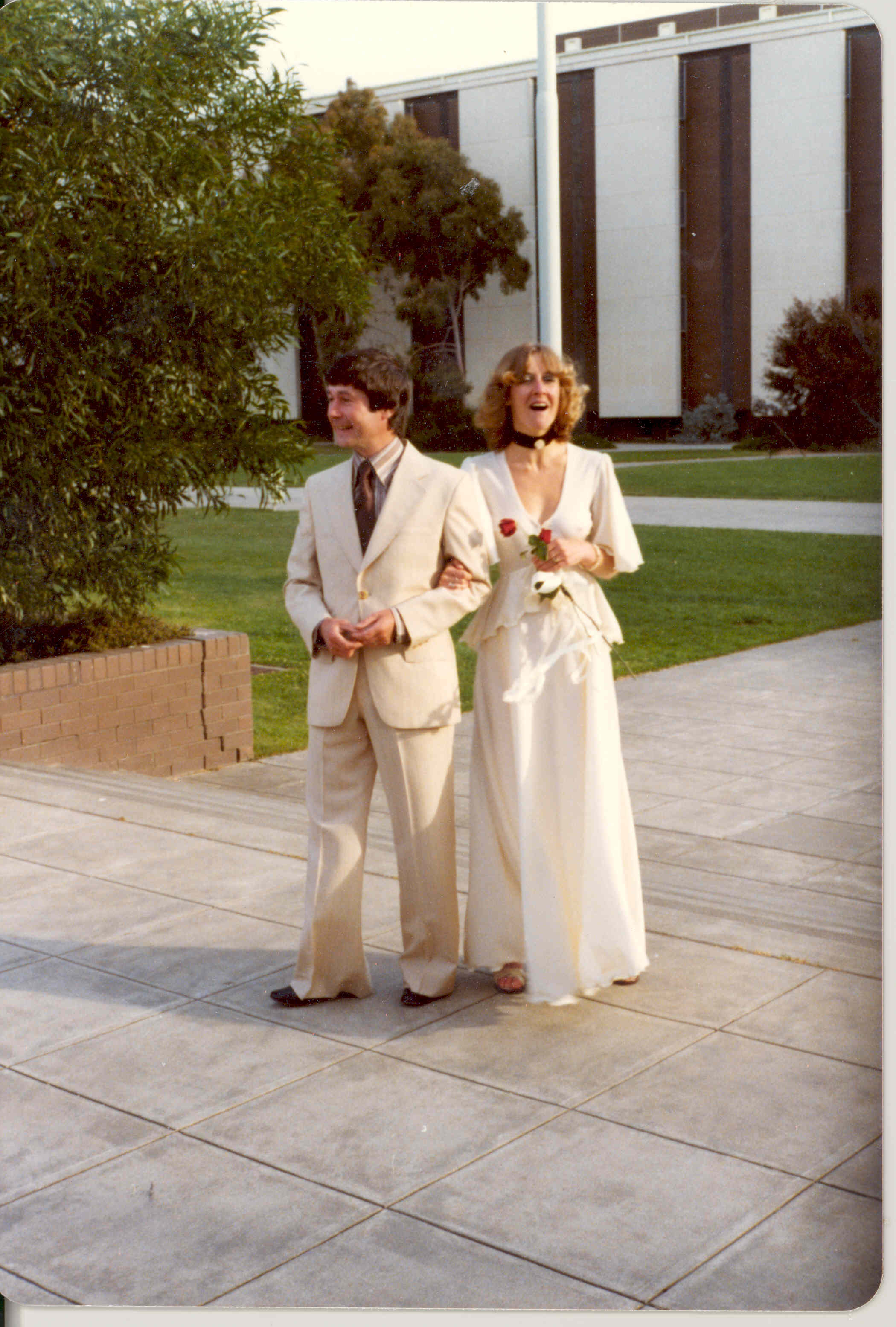
When my husband and I married we failed to please either set of parents by sharing the tradition each upheld of marrying in the Catholic church. We chose instead the Religious Centre at Monash University where my husband had once studied.

1977-3

I’m all for receptions held at home. The personal touch. My oldest daughter married in her own home, my second daughter had the reception in her home of origin. Home can be wherever we want it to be, but it’s a place where the small children, and there were several at both weddings, can run amuck in relative safety.

Not one child fell into our pond, not one child fell while running, though there were a few brawls among our two grandsons, none of great import, not that I could see and both boys managed to hold onto the rings during the service for long enough that they could in time hand them over to their grandfather who became the ring bearer on the occasion as he had made the rings.

Two daughters married, as Mrs Bennet from Pride and Prejudice fame might say: two daughters married… ‘I shall go distracted’.