

Last night I trawled through photos which one of my brothers has collected onto a CD, photos that cover the span of my mother’s life from her birth in 1919 until she turned eighty five.
I went back to 1952 in search of photos that mark my birth. There is one photo underneath which my older sister has written my name. I recognise my sister’s handwriting, but I fear she has it wrong.


Is this really me, in the first with my mother,in the second with my older sister and brother, or is it another brother, who was born some seventeen months earlier? He and I were the first two of our parents’ children born in Australia. My mother has described this brother’s birth as difficult. The hospital was crowded and they left my mother outside on the veranda. When she felt the need to bear down no one heard her cries for help. Not until he was nearly there.
Several years ago when I was raging against my mother and reluctant to acknowledge our connection, I still wanted to know something about my birth, so I disguised my interest under a curiosity about what all her births were like and my mother obliged me by writing up her memories of each one of our births.
Given there are nine of us my mother’s memories must become confused and conflated, but mine she remembers as a forceps delivery.
I check my forehead for bumps, for signs of the imprint of those metal clamps on my head. Forced into the world, dragged into life. I want some evidence of what it was like and can find none.
When you have spent several years in analysis probing the deepest recesses of your mind you become acquainted with the notion of your internal baby. Still I look for external evidence and there is almost none. It annoys me that I cannot lay claim to this image with any certainty. I want to look into the eyes of my baby self and see myself there, but I cannot. I can only imagine and even then I may be looking into my baby brother’s eyes.
On the other hand there are numerous images available from my life as a ten year old, twelve year old and fourteen year old. These I recognise as me, though you may not.
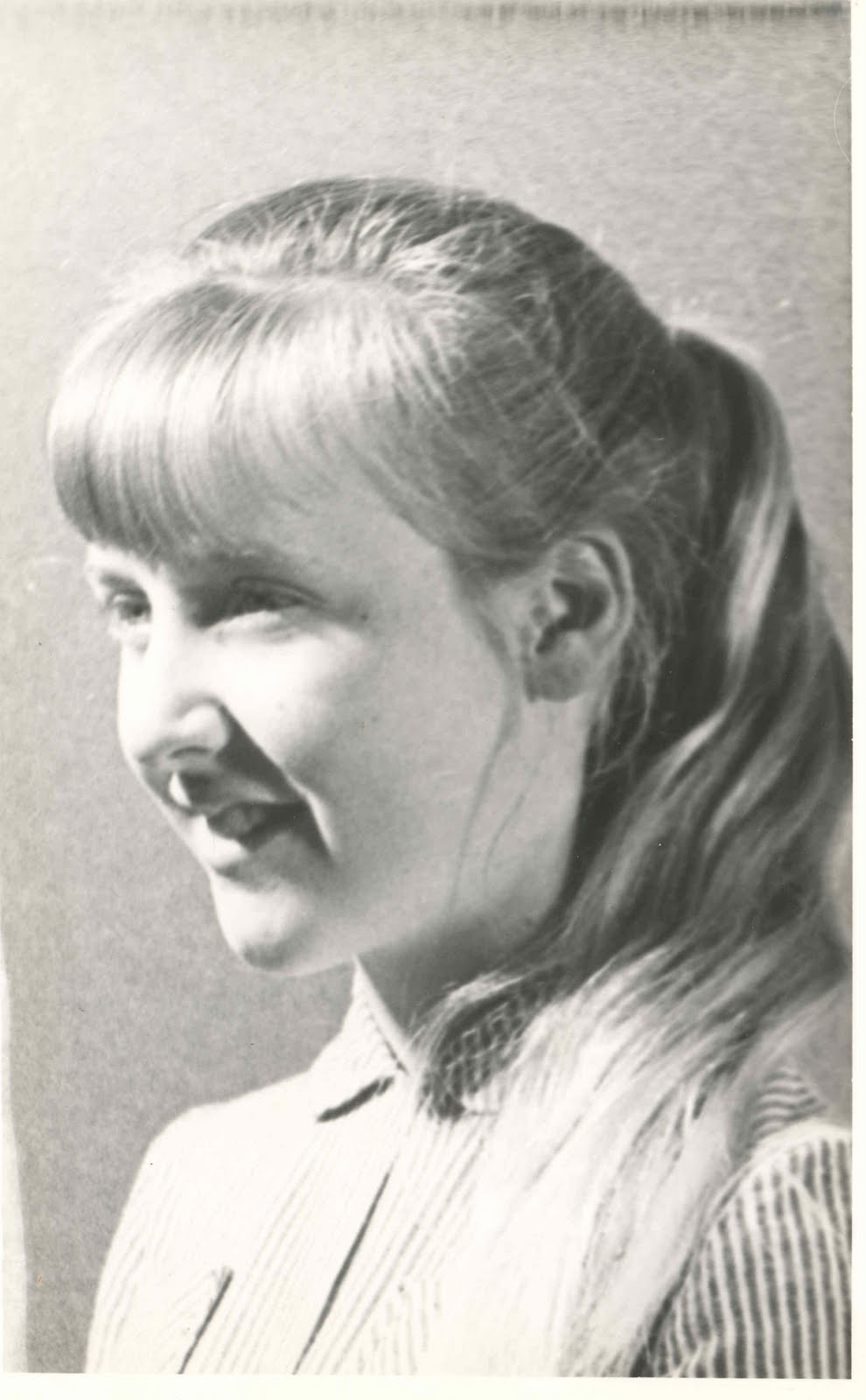
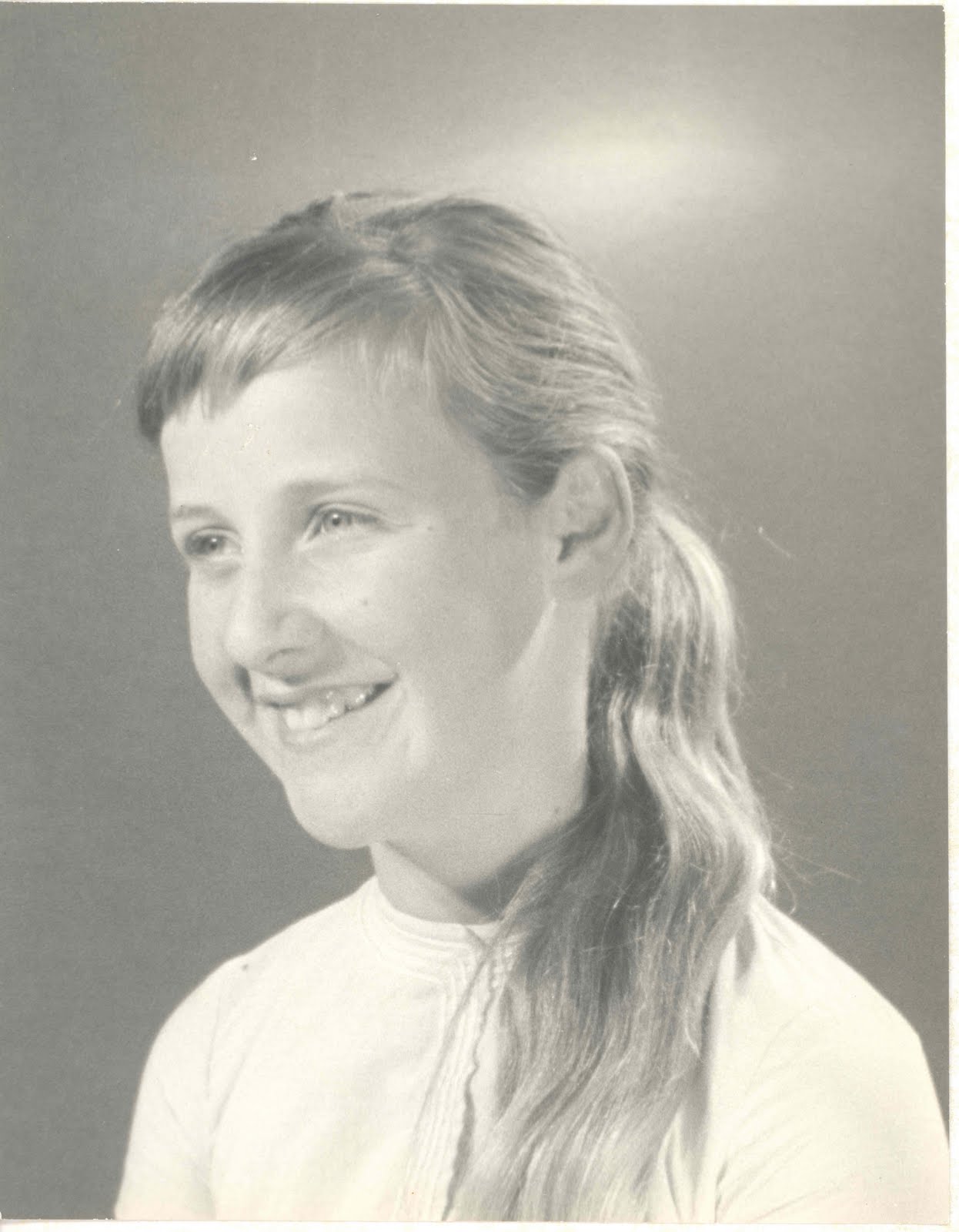

I thought I was ugly as a child. I look now and think not so, not so ugly at all. Why then did I feel I was ugly. Was it simply by virtue of contrasting myself to my two younger sisters who were always considered the pretty ones? Or was it something else, some sense that the way I felt inside, all the badness I carried with me in those days should be translated directly onto my face, to turn it ugly overnight?
I thought of myself then as like a gargoyle, those ugly creatures that clung to the edges of roof tops in the ornate houses that surrounded the streets where we lived.
I am about to start work on a paper about autobiography as fiction or in excess of fiction. What is your take on this? When I write about myself as in autobiographical practice is it necessarily fictional to some degree or is it necessarily the true story of my life?
Why do I even bother to ask the question? We all know the answer. It’s one of those horrible endless questions some of us agonise over. Like the nature/nurture argument some of us battled over at university: Is it your genetic make up and hereditary or is your environment, your education and upbringing that determines how you turn out?
Why do we get into such artificial polarised debates? Of course, the answer is neither one nor the other. Of course, the answer is both and more besides, but our perspective affects the degree to which we might favour one or the other.
In the argument over autobiography as fact or fiction, I tend more towards the fictional side of things, even as I use the stuff of my life as it ‘really ‘ happened in my memory as my building blocks.
The way I recast the story of my life, the way I re-remember events, even as many of these events can be corroborated by others, including my siblings, I still do not regard them as the truth, the whole truth and nothing but the truth.
I’m comfortable with a certain level of truth in fiction, emotional truth I call it, universal truths that lie in the stories we tell one another about our lives. These are distinct from outright lies and fabrications, falsehoods and distortions. I’m not interested in those, but more often than not such falsifications can be seen through. At least I hope they can be seen through.
Maybe authenticity is a better word. Authentic accounts of lives lived rooted in the past but brought into the present in our fictional interpretations of our memories. The blogosphere is full of it.