‘All day, all night, the body intervenes…’

‘I rode on a red bus, inside a clot of blood.’ Janet Frame on learning of Sylvia Plath’s death.

Grief does not get much deeper than this. To find words to convey the enormity of a sensation that travels without words in our blood streams in the marrow of our bones, red hot and throbbing.

I’d rather not think too hard about my own griefs. The way the blood trickled down my leg as the tiny speck of life I had been carrying for ten weeks ebbed away into nothingness. Blood again.

I’d rather not think about the bloodless way the analysts dismissed me from their training because as one said, I did not have the stuff it takes to do this work to analyse and understand another in the way all analysts believed understanding ran.

In the blood again. Constitutional, he said. Some have it. Most don’t. Rather like a vocation to the priesthood or convent.

God is calling you. You may not want to hear the call but there are not many he calls. Or as the saying goes, there are many who are called but few are chosen. And I, too, was among those rejected.

I’d rather not think about my ageing body, the way the blood sludges through my veins less usefully these days.

The way my mind cannot accommodate all the massive griefs of this wide world caught up in conflicts I hoped might one day end, only to realise they most likely never will.

‘All day, all night, the body intervenes. The creature within can only gaze through the pane –smudged or rosy – it cannot separate off from the body.’ Virginia Woolf On Being Ill.

The body, the earth, this overused, abused creature within all of us who cannot withstand the rigours we put it through and then in time must rejoin the cosmos.
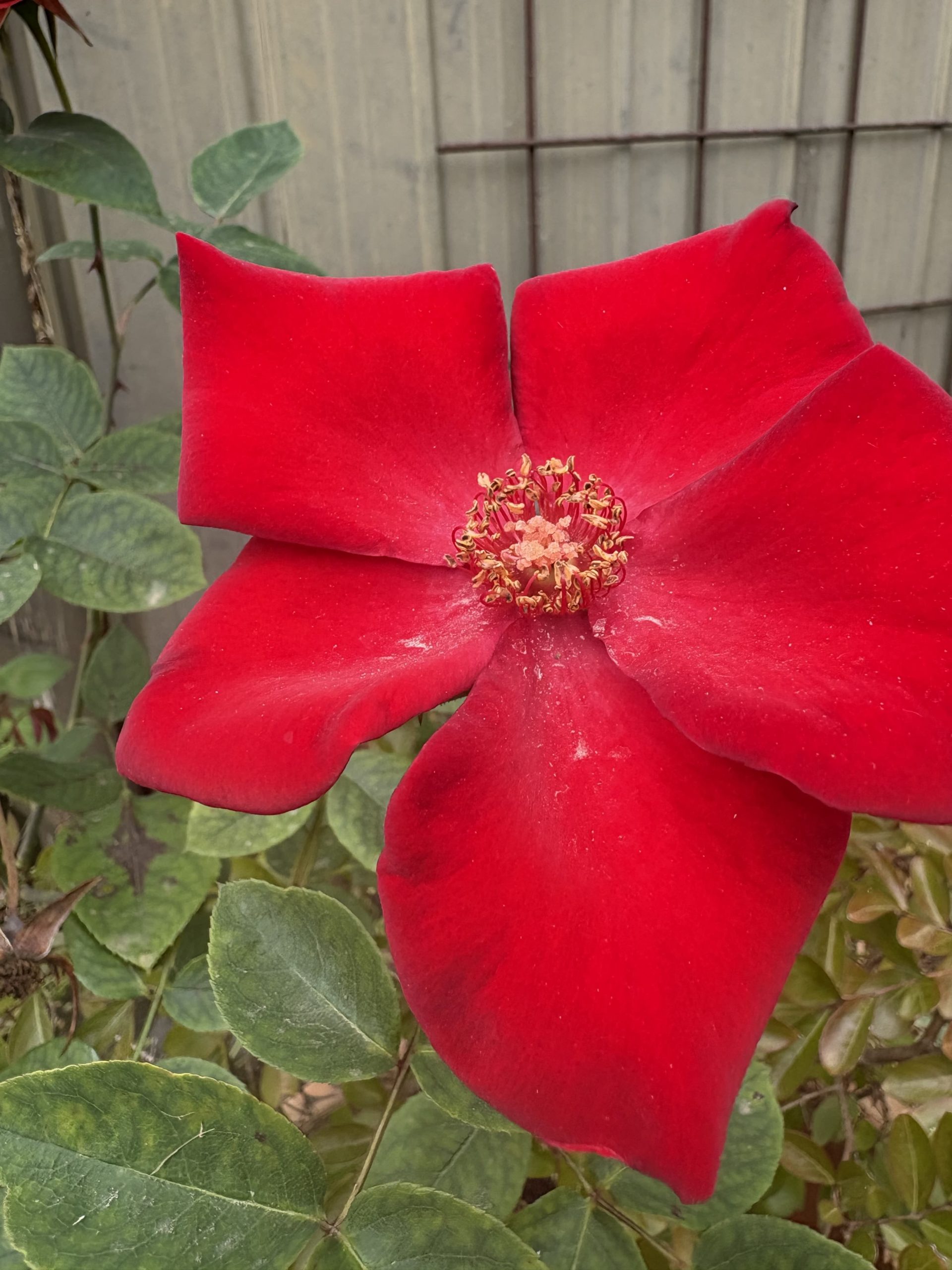
The other day I went to Ivanhoe for one of my writer’s group meetings at the Banyule library in a room we were able to use free of charge for ninety minutes until other people arrived and ordered us out.

I had arrived early and waited outside in the courtyard watching steams of kids from Ivanhoe Grammar rock up for some type of event. Younger ones with parents and others alone or with friends. Their blue blazers resplendent against the blue sky. Their youth and optimism seemingly well placed in face of the life that lies ahead of them. 

Inside the library, split into multiple levels with the usual stacks of books, and cubby holes in which people can hide away, there was also a small gallery. A friend and I visited after our meeting to view a few painters from the Heidelberg School on loan from the National Gallery.

I have never been one for art shows, for gazing at paintings from a distance much as I admire the work of artists and wish that I too could paint like several of my siblings and a couple of my children.

How is it when my grandchildren ask me to draw a dinosaur, dog or train I feel paralysed into indecision?  And incompetence.

Like most children there must have been a time when I could draw as well as the rest of them, but that raw talent that comes with an artist’s eye evades me now.

So, I reserve my palette for words. Words I can splatter onto the page to form patterns and images that might make sense to the reader.

As Zadie Smith urges, I try my best to write without desire. Here I am an artist on their first draft. Not much is taking shape here. Nothing I can pinpoint as the heart of my essay, the thick red vein running through carrying the blood of my success, an image that others can make sense of.

I lunched with my friend after our visit to the gallery. She ate avocado and mushrooms on toast and I enjoyed fruit bread with lashings of butter. Cups of tea and conversation. Endless conversation, the life blood of my existence. If I did not have conversation I think I might die.

Later in the afternoon I shared another conversation with another friend with whom our blood does not run so freely.

We sit on the edge of estrangement for reasons I cannot fully fathom.

Why do I keep on trying? She wants friendship of the treacle variety, warm and friendly and ever so sweet.

Friends must be tolerant of one another, but to my mind friends must also be able to argue the toss. To get their disagreements out into the open and battle out their wounds. Survive them together to come to an understanding even if it is one of tolerating our differences.

Empathy is a matter of imagination. To put yourself into the shoes if another. To see you as they might see you and to help them to see you as you might see yourself. It’s treacherous territory.

Over the course of my long lifetime, I have enjoyed many friendships. Those glorious connections with another when the call coming through sets my heart a little faster at the prospect of connection.

I have also watched as friendships died. Some times through geographical distance when people move away for a change of scene or occupation.

When I left school I imagined the friends I forged in those final school years would stay close forever. But not so. At university where over four years I carved other friendships with more progressive friends. I thought they too would last forever. 

The boys from St Bernards, a close group. They still meet. I see them together on Facebook, but I am on the periphery a memory for some but for most invisible. Never quite fitting in. 

And then in my profession over the years in one association and other friendships that meant we shared food in one another’s houses. They too came and went like the seasons only these have not returned.

When we meet as we occasionally might years later, the spark that once set our hearts blazing is weak. And I wonder how it could have been that once in my life I valued your company and now our friendship is over.

When I first met the man I came to marry, and to whom I remain married, a man with whom I have endured many if the undulations that come in any long-lasting connection, he told me words to the effect: ‘Blood is thicker than water.’ 

We both valued our family connection. But over time we formed our own family and the families that once firmed us although still present in our lives serve as bedrock to our beating hearts, but they are not the heart itself.

The blood that courses through our veins has shifted its course.

And when one of us leaves the other behind, the one left behind will ride the red bus like Janet Frame caught in that crimson blood clot, the congealed blood of a wound that will never heal, like the loss of the baby I never saw come to life.

There are some losses we can never overcome. They are part of who we become, and we die with them clasped firmly in arms. To be grieved for in our turn by those we might leave behind. Others who must climb the steps into that red bus, a congealed clot of blood. 

On misery, the Murray River and maggots in a wedding cake

‘Beyond the fixed stars and variable suns…’ James Joyce Ulysses

Last night the wind howled, and it took energy to convince myself, the tall oak in our garden with its high and crooked branches would not drop one onto our roof. 

In the particular lies the universal, or so I’m told. I can believe. For isn’t it so, these howling storms and the bleak weather with which we’re faced mid-autumn in Melbourne, Australia while on the other side of the world people roast, is also a reflection of the volatility of our times. 

The worst of times and the best of times, only who’s to say.

In 1992 we hired a houseboat on the Murray, three small children, one husband and two adult friends, a long-married couple who chose to stay childless and enjoyed the company of our children in small doses by way of remembering their own child selves. If they ever took the opportunity of reflecting deeply. 

On this boat, I read Janet Frame’s memoir, Angel at my Table. Stretched out after lunch while the other adults slept and the children played, on one of the pull out beds in the living area cum kitchen area. 

I wept when reaching the section where a sister died drowns, first one sister then another. Dickie hearts, which no one knew about until they died, and in the aftermath, Frame’s life is turned around towards even greater desperation. 

I was grieving then too, much as I tried to maintain a cheerful demeanour. The analysts had only months earlier decided I was unsuitable for their training, and I could not see how I might go on in my chosen career beyond putting one foot in front of the other. 

We took turns to steer the boat across the slow river, which at a time of receding drought was shallow in places, such we got stuck. We needed to drag tall poles to ease us out of the mud. 

If only it was as easy to tug myself out of my hidden despair. If only I knew then that time would pass and the pain ease. That I would find other ways of using my mind to manage my life, that over time I might find even more rewarding than wearing the title, psychoanalyst.

It was to be a medal of honour, like the coloured badges I collected as a young girl guide. A badge for being able to set up a tent. A badge for making a telephone call from a street phone, coins in the slot, dial the number and pull on the receiver in that order, then speak to your mother or sister or brother at the other end. A badge for sewing on your badge, in neat whip stitch. To stop the edges from fraying. Small marks of development. 

I knew this was how a person grew. You learned to do things you were previously unable to master. You absorbed new forms of arithmetic. Division, multiplication, and fractions. You learned to spell long and obscure words. You rote-learned the dates of wars and kings and queens from the past. The date of Federation in Australia. Easy because it happened at the turn of a century.

You learned the colour of your nation’s flag, and the mysteries of the rosary, the joyful and sorrowful mysteries, the luminous. You scrolled through the stations of the cross, and committed the Credo, (the ‘I believe’) to memory. You repeated the ten commandments, only they had protestant ring. You rattled off the Our father, whose final sentence differed from the Our Father they recited at Girl Guide camp one Easter time when you were the only Catholic child present. 

The small differences between the ways people peeled their potatoes, some under running water. A waste. Others in a sink filled with water which grew murkier by the minute as each potato was robbed of its dusky over coat. 

So much to learn in childhood, and much of it I managed, always on the edge of amazement as if I had learned words by rote and could hold onto them only if I recited them out loud and from the beginning.

I did not understand the things I learned. Just the words. It left me with an uneasy sense of fraudulence. As if I could recite swathes of knowledge by rote, but if you prodded me, stopped me mid-stream and interrogated the meaning of what I was saying, I would lose my place. A type of stage fright and I could not speak or think or understand the mysteries of the world.

I felt this way when I first read Sigmund Freud. The case histories of Anna O and Little Hans. On the page, these stories simple, but the voice of the great man had an old-fashioned tone. It took time to absorb and even then the ideas he offered floated in the air like so many dust motes I could rote learn, but not corral.

I went once to an evening lecture conducted by one of the newer members in the 1970s, a Lacanian analyst from South America who spoke non-stop for over an hour.

Not one word made sense to me. Granted I was new to this language, and he was of Lacanian extraction. Jacques Lacan’s writings translated into English are not for the simple minded. They are dense and opaque. Belonging to universities and in need of interpretation before you can grasp something of their essence. 

Even today, decades later, my eyes glaze over when I read Lacan’s writing. Not so Freud’s but then, it was all gobbledygook, and even more veiled than the words of the bible.

Mid-afternoon on the Murray after we stopped somewhere for lunch and tied our boat at anchor to one of the many jetties along the river’s edge. I watched the overhead sun illuminate the skies. Best at twilight when we were again at anchor and readying for the night when the sun danced across the red cliffs looming over the water. They threw reflections as though someone had folded a sheet of paper in half. Each side carried a replica of the other. Mesmerising. 

And Janet Frame took me to the ice cold of New Zealand and that room at her aunt’s whose walls were lined above the picture rail with the chocolate boxes of her dancing career. Her trophies. And at night after Frame’s sister had joined her, the one who later died, the two ate their way through every single chocolate putting back the empty boxes on display. 

Imagine the aunt’s horror when she discovered they had been scooped out. Those chocolates would soon be inedible but no matter to her. The shock, the scandal, the horror. And Frame’s shame.

It reminds me of the times when as a child I stole lollies and was duly punished. It reminds me of the top tier of our wedding cake, which still sits in a tin, sealed with silver masking tape at the top of my kitchen cupboard. 

Nearly fifty-years-old now, this cake will only be opened after one of us dies. I would not chance it ahead of time. Or maybe I would. Superstition says, it’s dangerous to open it ahead of the death of one of the partners, unless you open it when you should. And we missed that event because we never baptised our children, in the Catholic way. 


So, there were no milestones other than anniversaries when it was once okay to open the tin.

In my mind’s eye, I open it and see maggots. Though they could not survive for long, or get in. I see saw dust. The cake crumbed to powder. I see a perfect cake dulled by time, the once white marzipan icing, now yellow, but inside who knows.

And in this night of blustery winds, the tree branches stayed in place for now at least and the world as we knew it, at least here in Hawthorn continues.