Know your history

‘Time is coming for us,’ Claire Kilroy writes, its ruthless relentless charge, and before you know it, time is flying and we’re left behind or plunged headlong into eternity.

I lack imagination unless directed there by someone else. I cannot formulate stories made up from my unconscious. My stories are root-bound and tied to my own experience, as clear as my memories allow. 

‘To know your history is to carry all your pieces, whole and shattered, through the wilderness. And feel their weight.’ Sabrina Orah Mark.

To feel the weight of the past is to go into those memories and measure them for size and significance.

Place takes me there first. Place followed by objects. The faces of people come last. And so it is, I’m on the banks of the Yarra River well before they tidied up the bridge on Grange Road near the paper works. Tall red brick towers that once used water from the river in their paper production. 

Gone now to make room for unit after unit, perched on top of one another like a set of grey green blocks from a kid’s game of Minecraft, each one indistinguishable from the next, like rows of cars in a parking lot. Think folk singer, Pete Seeger’s Little Boxes:

You could walk down to the river’s edge over a grassy tree laden hill from Bourke Road in Kew and see cows on the other side grazing. Someone must have owned the hinterland then unless a staff member from the government saw fit to employ cows for lawn mowing duties. 

Best of all, I remember once submerged in the river on hots days, the brown water and slime underfoot, mixed in with fallen twigs disintegrating below the surface and the occasional rock. The yuk feeling of the unknown underfoot and my fear something dangerous might be lurking there. 

It was not the sensation of sediment between my toes, but the uncertainty of what made it into being that troubled me. Even then I needed to have some idea of what I was walking on. 

I had read about people who could walk over glowing coals simply by mesmerising their minds and walking lightly, to avoid burns. Like Jesus walking on water, only Jesus would not have been burned, had he opened his mind to the dangers. He might simply have sunk and drowned.

Recently, I read an essay from Robert Grossmark on his work with a man addicted to watching kiddie porn. The man tried to resist his addiction, aware of its dangers, but when he was lost in this pornography world he felt elated in ways other experiences could not allow. 

Something of his addiction to the pleasure of imagining these small children getting pleasure out of being sexually abused. He might well have been abused himself and it took many years before an elder sister came to him in adulthood and apologised for tormenting him sexually when he was four or five. 

The clincher, Grossmark observes, was his own experience growing up with separated parents, each of whom, but more especially his mother spent time openly in the company of lovers. His childhood was sexualised to within an inch of its life. 

Sexualisation of things can torment you when you’re a child. I know this well, though perhaps not to the degree of this man. 

My father saw sex in everything. And when I consider his history and all the shattered pieces he carried, I can only imagine what it was like in his childhood home. His father archivist the Dutch registry of births, deaths and weddings by day and at night, head of his household.

This father changed religions as often as you might change your underwear and at one time was enamoured of the freedom offered by the Mormons. The freedom to take on any number of women as pseudo wives. 

He included his younger daughter in this, as he might well have included his other daughter as he might well have included my father in some way. 

There was a time when I was a younger adult and first learned of my grandfather’s abuse of his children that I wondered, was he keeping a type of brothel.

The historian Barbara Van Balen helped me with my research when I could not trawl the archives myself. She discovered my Opa, Jan Christiaan Schoonevelt was imprisoned in Haarlem in a jail my mother called the parapluie – it was shaped like an umbrella – on charges of ontucht, which is old Dutch for licentiousness, profligacy and could have been incest, only they did not use this term in their records. Not from what Van Balen could see.

And my grandmother was imprisoned for a lesser period on charges of embezzlement. She stole something. When I asked my mother, what this might be, she speculated on coupons for food. 

During the war people were hungry. Hungry and desperate and sexually depraved in my father’s family history, and all this before I was born.

What do you do with shattered knowledge like this? The stuff that comes in bits and pieces without an imagination to stitch it together to create a story. How do you make sense of your life? 
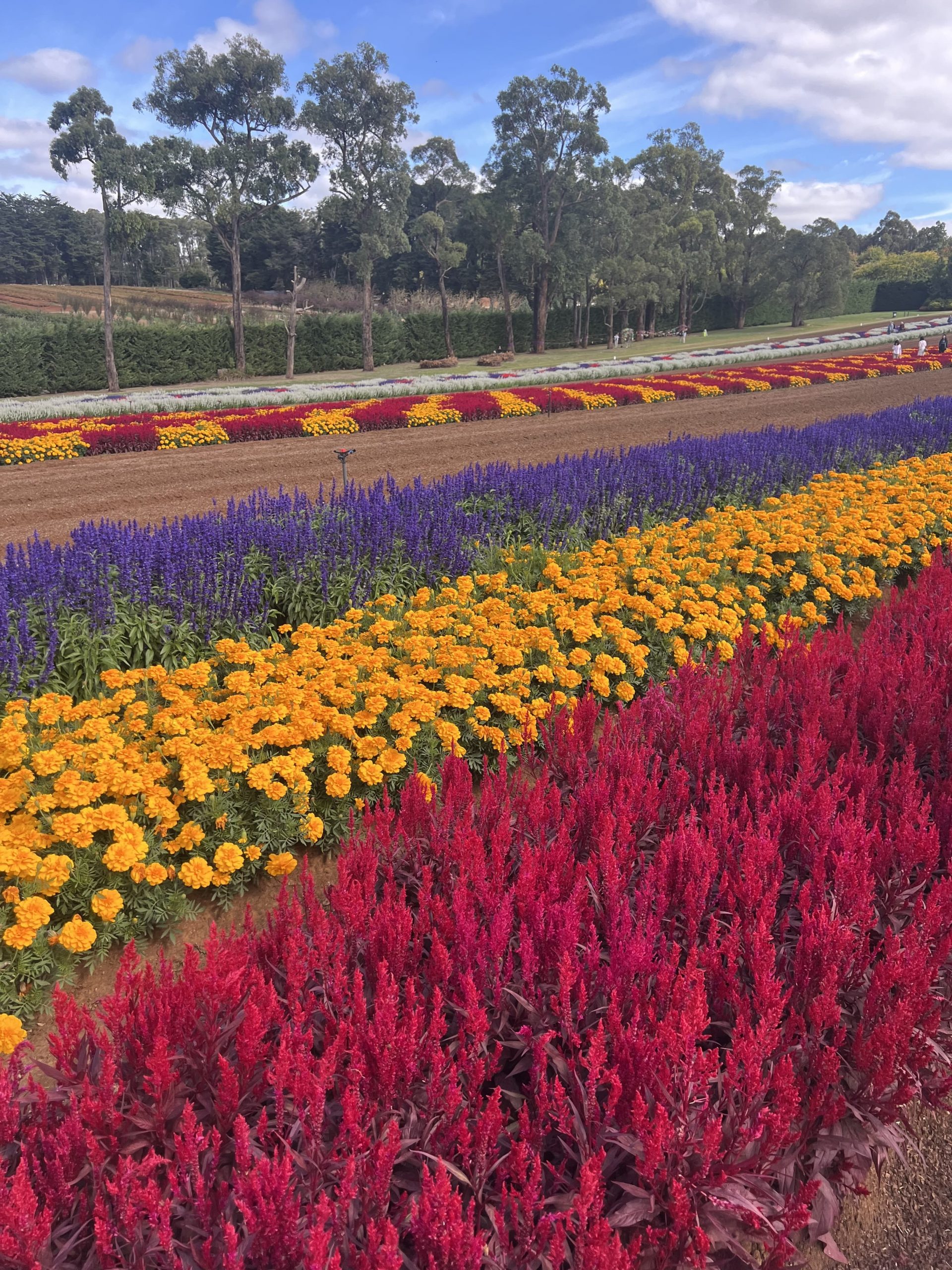
Not all little boxes look just the same. 

Running from love

‘Human behaviour is dictated by need not logic,’ writes Clare Kilroy in her novel Soldier Sailor while, her chief character’s observation as she coaxes her toddler into taking medication against pain. 

I’d add, not only by logic, but also by desire. 

Need might come first but how close on its heels, trots our wish for comfort, for pleasure, for relief.  Our desire. 

I do not need that glass of wine I enjoy each evening with my meals. A glass that might rise to two. I do not need it, but I want it. Pleasure and relief follow the taste and the lifting of spirits that comes with every sip, predicated not so much on need as desire. 

But need can couch desire and the other way around. Even as logic tells me the wine is not good for me, something else drives me to pursue the comfort of my desire. And so, it is for so many things in life, not all of them malignant.

Take my desire to write. It can also feel like a deep need emerging from some habit formed long ago when I first found comfort in expressing myself on the page. This comfort helped me gain some deeper equilibrium. Without it I find myself feeling slightly unhinged, as if I’ve forgotten to brush my teeth, or left home without my wallet or these days my phone. 

I do not need my telephone. I can survive without it but the impulse to carry it everywhere becomes so great because I have formed another habit of attachment whereby without my phone nearby I feel a great hole.

And an absence, at least of the deepest type, as Winnicott tells us, becomes a malignant presence. Not just a void but the presence of something so painful we will do anything to avoid it.

Too much absence in infancy can lead a person to breakdown in later life when triggered to madness as a defence against the breakdown that never happened. This breakdown could not have happened when we were tiny and helpless hell-bent on survival but as we grow, we find ways of the great antidote to all this pain of loss and absence is love. 

And love can be so hard won, so hard to come by that when we feel a snippet of it we can suffer extraordinary pain. The painful thawing from a frozen or paralysed state. It hurts to come back to life. The opposite of Jonie Mitcell’s words in her song Big Yellow Taxi,

‘Don’t it always seem to go that you don’t know what you’ve got till it’s gone.’ 

It’s opposite when you know what you’ve got, for the first time a taste of real love and care it can feel so excruciating given its past long absence for the best part of your life that all you want to do is run away from it.

Many a damaged soul has pushed away the warm care and love of another because it feels too much. Too much because like a person deprived of food for far too long, we need to reintroduce food slowly otherwise their gut will seize up in pain.

In running from love, as in running from pain we get locked inside the pain of the non-requited.

But let me lighten the mood here. My words feel heavy and do not reflect the state of mid I’m in retesting new gasses that unfortunately slip too easily off my nose and need adjustment.

My husband reads the newspaper each morning, the old-fashioned way in full spreadsheet form. He reads from start to finish, bypassing only the advertisements and some of the sporting results. He reads with the intensity of a person determined to understand better what goes on in the world. Unlike me, who tends to skim world events online and only when a subject holds my interest do I read the entire article.

Yesterday onto his second cup of tea, he looked up briefly chuckling. And read out loud to me from Monty Python’s Holy Grail. King Arthur approaching the castle of a French man and asking for food and shelter in their search for the holy grail. 

The French knight argues he already has a grail withno need of another. Then show it to us. The Frenchman refuses Arthur’s threats, ‘You don’t frighten us you English pig dog… I fart on your general direction. Your mother was a hamster. Your father smelt of elderberries.’

A term of delightful derision that makes my heart sing.

Such clunky words put together to enlist outrage in the other while we the audience laugh our hearts out at the ludicrousness of it all.

Love and loss, life and death. You can’t have one without the other writes Julia Samuels and if you block out he pain you also block out the joy. You lose your sense of humour as you squash your desires, but if you refuse to recognise your actual needs and replace them only with whims and desires then you also get into reverse trouble. 

Like a junkie hooked on heroin. Your own natural capacity to find joy in life is slowly eroded and you find you need more of whatever it is you’re addicted to as a replacement for the stuff that lubricates your body and mind. 

So again, the philosophers are right when they espouse moderation in all things, with occasional outbursts to spice up the flavour of our lives, like salt on a hard-boiled egg, strangely one of my favourite foods. 

Must be a throw back to childhood when eggs were such a novelty we were only allowed one each Sunday for breakfast.

Wowserism is as dangerous as excess. Let’s hear it for the boring middle road with occasional digressions into glorious lookouts over great joy and love notwithstanding the inevitable ruts in the road and moments when the firm ground turns to mud or sand. 

Life is never even but it can be manageable if we share the load with others. Seek out their help when needed and offer it back at other times when other folks’ needs might supersede our own.