‘All day, all night, the body intervenes…’

‘I rode on a red bus, inside a clot of blood.’ Janet Frame on learning of Sylvia Plath’s death.

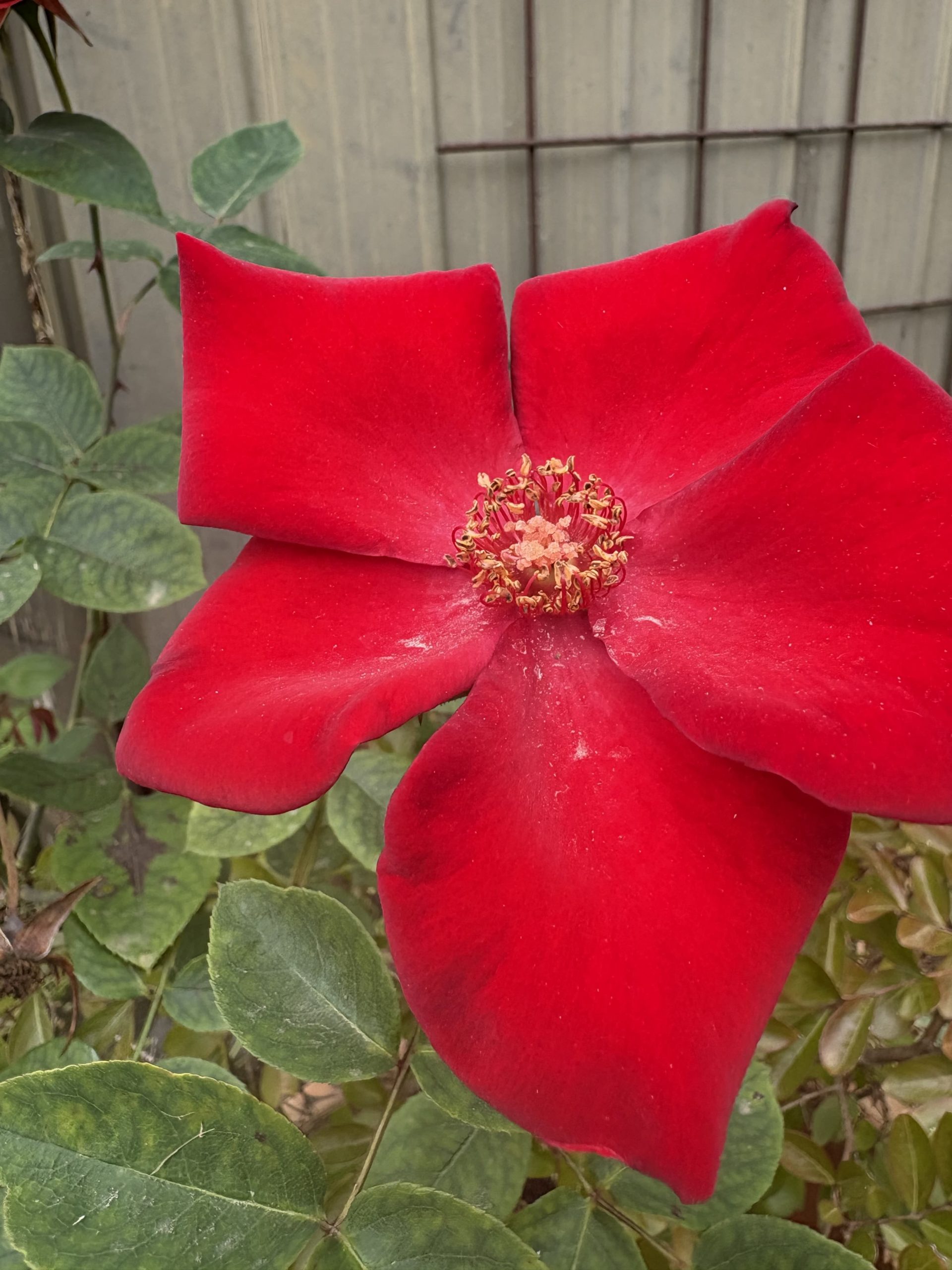
Grief does not get much deeper than this. To find words to convey the enormity of a sensation that travels without words in our blood streams in the marrow of our bones, red hot and throbbing.

I’d rather not think too hard about my own griefs. The way the blood trickled down my leg as the tiny speck of life I had been carrying for ten weeks ebbed away into nothingness. Blood again.

I’d rather not think about the bloodless way the analysts dismissed me from their training because as one said, I did not have the stuff it takes to do this work to analyse and understand another in the way all analysts believed understanding ran.

In the blood again. Constitutional, he said. Some have it. Most don’t. Rather like a vocation to the priesthood or convent.

God is calling you. You may not want to hear the call but there are not many he calls. Or as the saying goes, there are many who are called but few are chosen. And I, too, was among those rejected.

I’d rather not think about my ageing body, the way the blood sludges through my veins less usefully these days.

The way my mind cannot accommodate all the massive griefs of this wide world caught up in conflicts I hoped might one day end, only to realise they most likely never will.

‘All day, all night, the body intervenes. The creature within can only gaze through the pane –smudged or rosy – it cannot separate off from the body.’ Virginia Woolf On Being Ill.

The body, the earth, this overused, abused creature within all of us who cannot withstand the rigours we put it through and then in time must rejoin the cosmos.
The other day I went to Ivanhoe for one of my writer’s group meetings at the Banyule library in a room we were able to use free of charge for ninety minutes until other people arrived and ordered us out.

I had arrived early and waited outside in the courtyard watching steams of kids from Ivanhoe Grammar rock up for some type of event. Younger ones with parents and others alone or with friends. Their blue blazers resplendent against the blue sky. Their youth and optimism seemingly well placed in face of the life that lies ahead of them. 

Inside the library, split into multiple levels with the usual stacks of books, and cubby holes in which people can hide away, there was also a small gallery. A friend and I visited after our meeting to view a few painters from the Heidelberg School on loan from the National Gallery.

I have never been one for art shows, for gazing at paintings from a distance much as I admire the work of artists and wish that I too could paint like several of my siblings and a couple of my children.

How is it when my grandchildren ask me to draw a dinosaur, dog or train I feel paralysed into indecision?  And incompetence.

Like most children there must have been a time when I could draw as well as the rest of them, but that raw talent that comes with an artist’s eye evades me now.

So, I reserve my palette for words. Words I can splatter onto the page to form patterns and images that might make sense to the reader.

As Zadie Smith urges, I try my best to write without desire. Here I am an artist on their first draft. Not much is taking shape here. Nothing I can pinpoint as the heart of my essay, the thick red vein running through carrying the blood of my success, an image that others can make sense of.

I lunched with my friend after our visit to the gallery. She ate avocado and mushrooms on toast and I enjoyed fruit bread with lashings of butter. Cups of tea and conversation. Endless conversation, the life blood of my existence. If I did not have conversation I think I might die.

Later in the afternoon I shared another conversation with another friend with whom our blood does not run so freely.

We sit on the edge of estrangement for reasons I cannot fully fathom.

Why do I keep on trying? She wants friendship of the treacle variety, warm and friendly and ever so sweet.

Friends must be tolerant of one another, but to my mind friends must also be able to argue the toss. To get their disagreements out into the open and battle out their wounds. Survive them together to come to an understanding even if it is one of tolerating our differences.

Empathy is a matter of imagination. To put yourself into the shoes if another. To see you as they might see you and to help them to see you as you might see yourself. It’s treacherous territory.

Over the course of my long lifetime, I have enjoyed many friendships. Those glorious connections with another when the call coming through sets my heart a little faster at the prospect of connection.

I have also watched as friendships died. Some times through geographical distance when people move away for a change of scene or occupation.

When I left school I imagined the friends I forged in those final school years would stay close forever. But not so. At university where over four years I carved other friendships with more progressive friends. I thought they too would last forever. 

The boys from St Bernards, a close group. They still meet. I see them together on Facebook, but I am on the periphery a memory for some but for most invisible. Never quite fitting in. 

And then in my profession over the years in one association and other friendships that meant we shared food in one another’s houses. They too came and went like the seasons only these have not returned.

When we meet as we occasionally might years later, the spark that once set our hearts blazing is weak. And I wonder how it could have been that once in my life I valued your company and now our friendship is over.

When I first met the man I came to marry, and to whom I remain married, a man with whom I have endured many if the undulations that come in any long-lasting connection, he told me words to the effect: ‘Blood is thicker than water.’ 

We both valued our family connection. But over time we formed our own family and the families that once firmed us although still present in our lives serve as bedrock to our beating hearts, but they are not the heart itself.

The blood that courses through our veins has shifted its course.

And when one of us leaves the other behind, the one left behind will ride the red bus like Janet Frame caught in that crimson blood clot, the congealed blood of a wound that will never heal, like the loss of the baby I never saw come to life.

There are some losses we can never overcome. They are part of who we become, and we die with them clasped firmly in arms. To be grieved for in our turn by those we might leave behind. Others who must climb the steps into that red bus, a congealed clot of blood. 

Grief stalks us silently

‘I measure every grief I meet’ Emily Dickinson

 Dark days in the pits of winter. So much of war, and politics and griefs held at a distance to assail us. Assail me. Where to begin, my mother on the front step of the converted chook shed which was her first Australian home, sweeping out the dust of a day. She describes this in a short memoir which Elly Zierke included in an A-four-sized yellow book, Old Ties, New Beginnings: Dutch Women in Australia.

Somehow I lost my copy of this book and had to visit Abe books and spend big money to buy a copy back. I have it now. My mother’s story along with nineteen other Dutch women who migrated to Australia during the mid 1900s for a new life in Australia. 

The standout feature of my mother’s story, sanitised to within an inch of its life, happens when she describes her sadness on seeing Father Ashe travel along the dusty streets of Greensborough on his way to give the elderly Hickling grandmother, a neighbour nearby, Holy Communion.

The good priest did not see my mother wave to him. He did not visit her, and in her writing here and elsewhere, she talks of how lonely she felt, how far away from her loved ones. How much she, who once held a significant place in her community on the Marnixplein in Haarlem, nestled in her Hooij family home, was a someone. Until she travelled to Australia and became a non-entity to all around her. 

A mother with several babies. We her babies, bit players in her life, as children so often feature in the lives of their parents. While parents typically loom large in the lives of their children. Though not for my mother. She never wrote more than one or two lines about her parents. She talked often about her beloved father, but her mother remains a mystery.

Grief stalks us silently. The stab of sorrow through my mother’s heart, her longing for a place she once called her home, as she gazed across the yellow sands of the beach at Mentone to the far away horizon and her idea of home. Her home in Holland, the way it was before she left. 

My mother when she was someone. A woman reading and enjoying her cigarette.

When I was seventeen years old, I travelled with my younger sister to Canberra. We drove with an older sibling – must have driven, for how else could get there? A bus perhaps. Surely not a plane. I took my first plane trip in my twenties when I went to Sydney for another brother’s wedding. 

Surely we went by car, as we always went by car to Canberra. The long flat bitumen up the Hume. The endless paddocks, cows, sheep and horses, the sorrow of those barbed wire fences, the yellow/green tufts of grass, the rusted sheds along the way, the sad houses tucked behind scrabbly gum. The disappointment of the Australian bush until we reached the perfect man-made dimensions of the state capital Canberra and moved into my brother’s rented house at the foot of Mount Ainslie for a week during the school holidays. This brother who had once been in the seminary but changed his mind. No longer intending to become a priest. He chose marriage instead to a dark-haired beauty with the equally beautiful name of Sybilla. 

How I admired her. Her pale skin, her warm smile. The beauty spot to one side of her lush mouth. High cheek bones that spoke to her European ancestors. And a mother who was big and warm and generous. She fed us cakes and egg filled sandwiches till I was fit to burst. This at that torturous age of seventeen when my body was filling out and I was getting tall. Taller than my mother and older sister. So tall, I feared my height might never stop and with it my width. I feared becoming a freak, an invisible freak to all, only illuminated through my vast size.

We drove home from Sybilla’s mother’s house that night, my brother at the wheel, my younger sister and I in the back of his car. I looked out the window onto the sparkling lights of the city. I have never been filled with such longing. Even now I cannot name the sensation beyond that word. A sense that maybe I carried some of my mother’s grief inside. Something of her sense of being a non-entity because it struck me at that moment, even as I knew I belonged within my family, sixth in line and held a place somewhere in my mother’s heart, I did not feel I was loved. As corny as that sounds to me now. As pathetic in its resonance as anything I can imagine, the pain of that moment spread like the drops of rain on the window, like tear filled eyes that blurred the street scape into a grey and black mess punctuated only by the flickering of lights above the street line. 

It is my first measurable grief, attached to no one and nothing. A void of emotion, a well of pain and I cannot attach it to any specific event such that it holds meaning beyond the image of a young girl in adolescence struggling to fit into her body and mind as she stretched into new dimensions of experience.

Isn’t that the thing of adolescence, a roller coaster time where every experience is laced with ennui or inflamed rage, sensitivity to every slight, an intense dislike for anything that breeches the high-minded standards of the day and an intolerance for bigotry of any kind.

I feel this way now in the furore over plagiarism. I cannot join the throng of people decrying John Hughes for what he has done. Misguided as he might have been in not telling his readers ahead of time that he was working in the words of other writers before him. 

If only he had done this, and he would be spared the torture of the moment through which he lives. I cannot join the shrill chorus of accusers who lambast him for his heinous ways.

I have always reserved an edge of something for the wrong doer, except for people like Donald Trump, who to my mind exceeds all excess in his arrogance. 

John Hughes fucked up. Forgive him. Do not write off his every word because he has piggy-backed on the shoulders of those who came before him, as we all do. Only most of us manage to acknowledge most of our sources. And I say most, because I have no doubt I have used another’s words in my own writing and neglected to add their name again because words are like this. They slide into our minds as if our own. Even now Zadie Smith’s words for her character Samad run around in my mind. 

‘Can’t say fairer than that,’ he says often enough, as does his beloved companion Archie. 

‘Can’t say fairer than that.’ As means of exonerating themselves from wrongdoing. A means of entering a state of acquiescence to a life filled with complex contradictions.

My mother had sayings of the same kind. ‘And that was that!’, she ended her stories. An intake of breath, Ah Hah. Not quite as bad as the expression, ‘It’s God’s will’, but close enough. A type of resignation to fate. A way of bypassing the intensity of the pain of every grief people meet throughout their lives. 

‘Can’t say fairer than that.’