Not dead yet.

‘The world is a skin around sorrow.’ Emily Dickinson

Days pass and you’re locked inside your body, you cannot escape much as you might want to try, especially from a body that falters more than it flies.

Have you had dreams, when you find yourself airborne? When you can simply, by wishing, lift off the ground and find yourself gliding along air currents?

Such dreams of bliss and I enjoy them occasionally for no reason I can fathom other than as a lightening of my state of heaviness, which crashes in from time to time.

This morning in those idle moments of lying in bed before the day demands I move, I mused on the history of my visits to hairdresser’s, unable to remember any such visits until I was in my twenties.

I’m in the grip of an internal editor who keeps tripping me up. I’ve made him a ‘he’ because he prizes objective reasoning above all else. It gets in the way. 

Alison Williams on the Brevity blog writes about the need for brevity. If you write something like ‘She picked up her phone and texted her boyfriend’, it’s better to reduce these words to, ‘She texted her boyfriend’.

Convert excess into one simple verb. 

Something of these reductionisms bug me.

I start to do it in my head, even as I’m thinking back to the days when someone else cut my hair. Not my father with his pudding bowl and scissors at the kitchen table. I want to create an image. But then there’s the image of my youngest child at three, shortly before we were off on a camping trip one Easter, when she took the scissors to her fringe. The result, a zigzag of impossibility until it grew out. 

Why was I so horrified? 

None of her older sisters had gone to this extreme. They only lopped off Barbie’s locks and it was enough to convince them Barbie’s hair never grows back. But the satisfaction of wielding scissors as a child never evaded them. 

It’s one of those mornings when I’m bogged down with the detritus of my life, its endless bric-a-brac of concerns. I can’t focus on anything. Times like these when the cruel voice trots in with its usual platitudes.

Who gives a shit about your visits to the hairdresser? Who gives a monkey’s? A rat’s arse? a fig? 

The derisions are endless. And all of them simply highlight the extent to which my internal editor keeps score of some hypothetical audience, who is even bothering to read this? He’s judging me all the way. 

As Virginia woold writes ‘On being ill’. ‘All day, all night, the body intervenes. The creature within can only gaze through the pane – smudged or rosy- it cannot separate off from the body.’

And the conscious mind, the mind that flits there on the surface of your skull is part of that body, tripping you up at every turn as every muscle and sinew joins in to declare your writing, and by extension you, are of no value. 

At times like these, I go back to my reams of quotes gathered with pleasure whenever some other writer whose wisdom and modes of expression appeal to me. I’m thrown back to my childhood and adolescence when I was convinced I could never say anything as well as the authors of the books I read. Or my teachers. 

I preferred to quote other people’s words and not use my own. 

I’m past this now except in moments like now when my cluttered head becomes a clot of ideas and memories refusing to take shape.
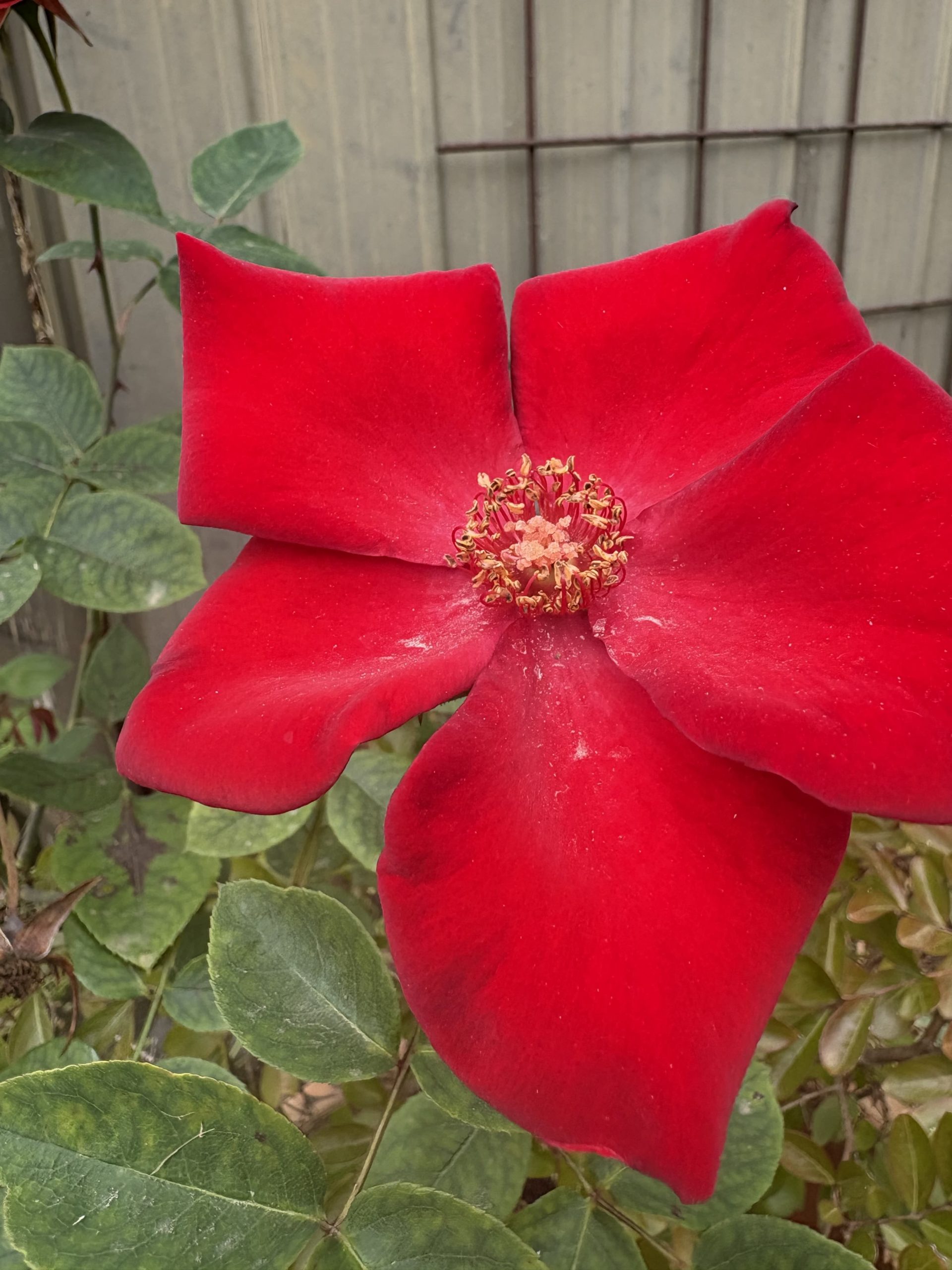
‘I rode a red bus, in a clot of blood,’ writes Janet Frame after she learns of Sylvia Plath’s death in 1963. 

Now there’s some poetry for you. Tiny words that decant a myriad of feelings I can never hope to capture except as aspiration.

Then Jeanette Winterson reminds me: ‘Words create worlds’. 

But how to reach those worlds, creating images in the mind of readers, any reader who d8es not scuttle their minds ahead of closing the book.

Yesterday I received an email telling me the book I published in 2017, The Art of Disappearing is to be terminated. 

What a dreadful word. As if you can do this to a book. It’s not the book itself, but the publisher’s agreement to distribute the book and sell it in the event someone wants to buy it. 

From now, the book is in my charge, and I must care for it if I’m to hope it has a long life than less than a decade.

This I understand is part of the hideous world of publishing for those of us who are also- rans. For those who lack the dignity of a name that sells books. 

It’s a business after all. We must use language, not so much to enter the slush pile of unpublished manuscripts, so as not to join trashed pile of books which fail to get traction.

Still it’s not this that bugs me this morning. I can find a way around his, but it’s the state of my body which intermittently sends shots of adrenalin through my brain as though I have been given a shock and am left briefly in the aftermath of an adrenalin bath. 

A visit to the doctor later today bothers me for the hypochondriacal fears I tend to develop in the recesses of my mind.

What if it’s my heart, or brain, mostly my heart? 

I have long decided my heart will fail me in the end, which happens to all of us in death. 

My mother died of heart failure in her mid-nineties. I’m a long way off this grand old age, but something about the idea of heart failure dogs me.

At least in my mind where thoughts about a slowing down of energy can be challenging.

If I have the inclination and energy later in the day I will report back here on my interaction with the doctor. Just so I have a sense that you and my beloved page on which I write can find a way of controlling the story such I feel better than I do now when my mind is assailed by dark fears.  

The world is indeed a skin around sorrow.  

In the evening, post visit, blood tests will reveal all, it seems and I’m not dead yet. 
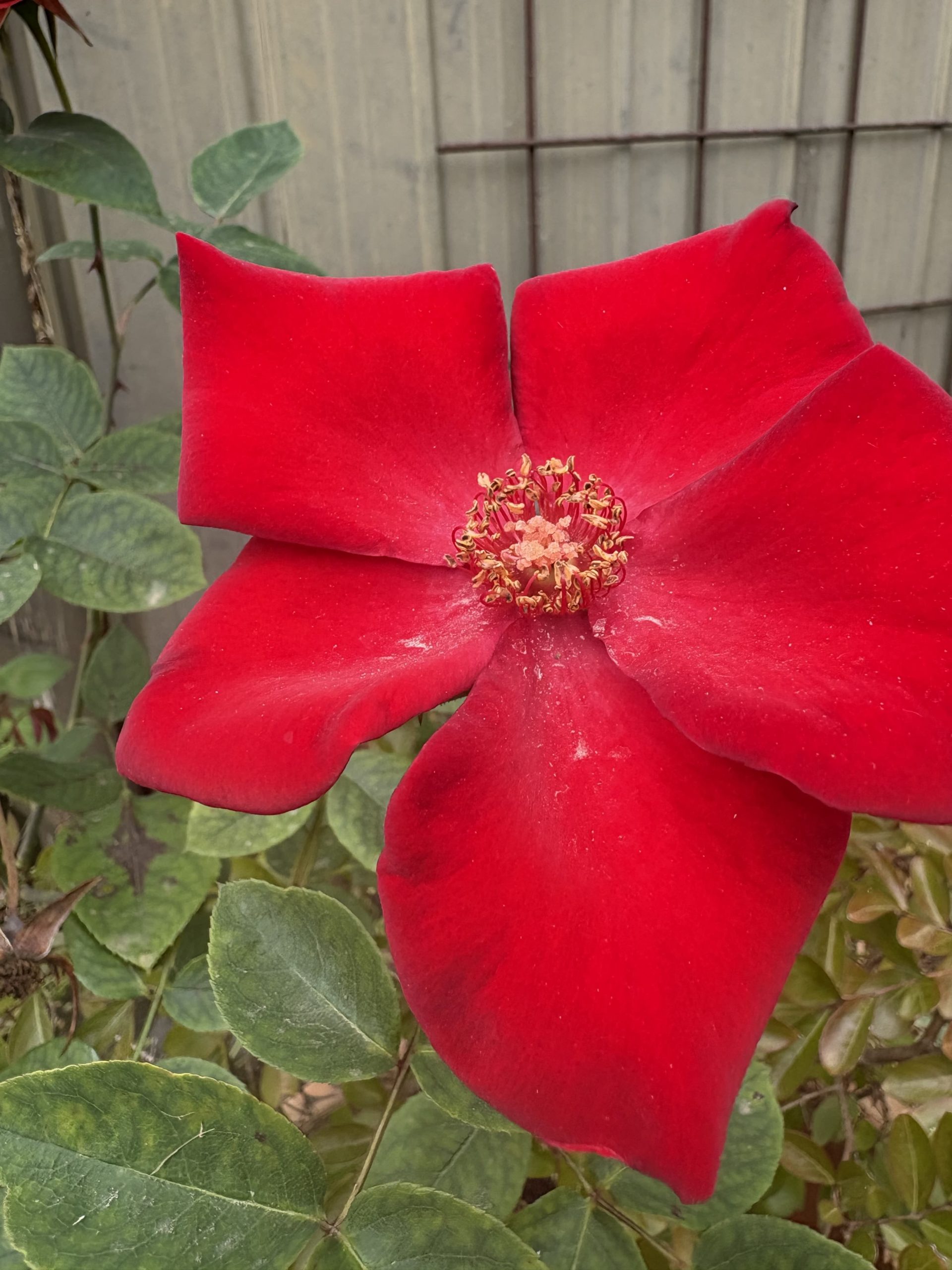
‘All day, all night, the body intervenes…’

‘I rode on a red bus, inside a clot of blood.’ Janet Frame on learning of Sylvia Plath’s death.

Grief does not get much deeper than this. To find words to convey the enormity of a sensation that travels without words in our blood streams in the marrow of our bones, red hot and throbbing.

I’d rather not think too hard about my own griefs. The way the blood trickled down my leg as the tiny speck of life I had been carrying for ten weeks ebbed away into nothingness. Blood again.

I’d rather not think about the bloodless way the analysts dismissed me from their training because as one said, I did not have the stuff it takes to do this work to analyse and understand another in the way all analysts believed understanding ran.

In the blood again. Constitutional, he said. Some have it. Most don’t. Rather like a vocation to the priesthood or convent.

God is calling you. You may not want to hear the call but there are not many he calls. Or as the saying goes, there are many who are called but few are chosen. And I, too, was among those rejected.

I’d rather not think about my ageing body, the way the blood sludges through my veins less usefully these days.

The way my mind cannot accommodate all the massive griefs of this wide world caught up in conflicts I hoped might one day end, only to realise they most likely never will.

‘All day, all night, the body intervenes. The creature within can only gaze through the pane –smudged or rosy – it cannot separate off from the body.’ Virginia Woolf On Being Ill.

The body, the earth, this overused, abused creature within all of us who cannot withstand the rigours we put it through and then in time must rejoin the cosmos.

The other day I went to Ivanhoe for one of my writer’s group meetings at the Banyule library in a room we were able to use free of charge for ninety minutes until other people arrived and ordered us out.

I had arrived early and waited outside in the courtyard watching steams of kids from Ivanhoe Grammar rock up for some type of event. Younger ones with parents and others alone or with friends. Their blue blazers resplendent against the blue sky. Their youth and optimism seemingly well placed in face of the life that lies ahead of them. 

Inside the library, split into multiple levels with the usual stacks of books, and cubby holes in which people can hide away, there was also a small gallery. A friend and I visited after our meeting to view a few painters from the Heidelberg School on loan from the National Gallery.

I have never been one for art shows, for gazing at paintings from a distance much as I admire the work of artists and wish that I too could paint like several of my siblings and a couple of my children.

How is it when my grandchildren ask me to draw a dinosaur, dog or train I feel paralysed into indecision?  And incompetence.

Like most children there must have been a time when I could draw as well as the rest of them, but that raw talent that comes with an artist’s eye evades me now.

So, I reserve my palette for words. Words I can splatter onto the page to form patterns and images that might make sense to the reader.

As Zadie Smith urges, I try my best to write without desire. Here I am an artist on their first draft. Not much is taking shape here. Nothing I can pinpoint as the heart of my essay, the thick red vein running through carrying the blood of my success, an image that others can make sense of.

I lunched with my friend after our visit to the gallery. She ate avocado and mushrooms on toast and I enjoyed fruit bread with lashings of butter. Cups of tea and conversation. Endless conversation, the life blood of my existence. If I did not have conversation I think I might die.

Later in the afternoon I shared another conversation with another friend with whom our blood does not run so freely.

We sit on the edge of estrangement for reasons I cannot fully fathom.

Why do I keep on trying? She wants friendship of the treacle variety, warm and friendly and ever so sweet.

Friends must be tolerant of one another, but to my mind friends must also be able to argue the toss. To get their disagreements out into the open and battle out their wounds. Survive them together to come to an understanding even if it is one of tolerating our differences.

Empathy is a matter of imagination. To put yourself into the shoes if another. To see you as they might see you and to help them to see you as you might see yourself. It’s treacherous territory.

Over the course of my long lifetime, I have enjoyed many friendships. Those glorious connections with another when the call coming through sets my heart a little faster at the prospect of connection.

I have also watched as friendships died. Some times through geographical distance when people move away for a change of scene or occupation.

When I left school I imagined the friends I forged in those final school years would stay close forever. But not so. At university where over four years I carved other friendships with more progressive friends. I thought they too would last forever. 

The boys from St Bernards, a close group. They still meet. I see them together on Facebook, but I am on the periphery a memory for some but for most invisible. Never quite fitting in. 

And then in my profession over the years in one association and other friendships that meant we shared food in one another’s houses. They too came and went like the seasons only these have not returned.

When we meet as we occasionally might years later, the spark that once set our hearts blazing is weak. And I wonder how it could have been that once in my life I valued your company and now our friendship is over.

When I first met the man I came to marry, and to whom I remain married, a man with whom I have endured many if the undulations that come in any long-lasting connection, he told me words to the effect: ‘Blood is thicker than water.’ 

We both valued our family connection. But over time we formed our own family and the families that once firmed us although still present in our lives serve as bedrock to our beating hearts, but they are not the heart itself.

The blood that courses through our veins has shifted its course.

And when one of us leaves the other behind, the one left behind will ride the red bus like Janet Frame caught in that crimson blood clot, the congealed blood of a wound that will never heal, like the loss of the baby I never saw come to life.

There are some losses we can never overcome. They are part of who we become, and we die with them clasped firmly in arms. To be grieved for in our turn by those we might leave behind. Others who must climb the steps into that red bus, a congealed clot of blood.